Cybersecurity is important because it protects your data, money, devices and reputation from people who want to steal or misuse them.
In the UAE, where authorities now block hundreds of thousands of attack attempts every single day, this isn't a distant IT problem.
Cybersecurity is something that touches every business, every government department and every household in Abu Dhabi, Dubai and beyond.
If you've ever wondered why "cybersecurity" keeps popping up in the news, why companies suddenly require staff to do security training, or whether a career in this field is worth pursuing, you're in the right place.
This guide breaks down what cybersecurity actually means, the threats shaping 2026 and beyond, what's happening right here in the UAE, and how you can build the skills to stay ahead, whether that's protecting your own accounts or starting a brand-new career in Cybersecurity.
Table of Contents
|
|
1. What Is Cybersecurity?
2. Why Is Cybersecurity Important Right Now?
3. The Main Types of Cybersecurity
4. Common Cyber Threats You Should Know
5. Cybersecurity Statistics That Matter
6. Cybersecurity in the UAE and Abu Dhabi
7. How Cybercrime Impacts Businesses
8. Cybersecurity Careers and Salaries in the UAE
9. Why Cybersecurity Certifications Matter
10. AI and the Future of Cybersecurity
11. How to Protect Yourself and Your Organisation
12. Final Thoughts
13. Frequently Asked Questions
|
What Is Cybersecurity?
Cybersecurity is the practice of protecting networks, devices, applications, and data from unauthorised access, cyberattacks, theft, and disruption. It combines technology, processes and people to keep digital information safe and systems running smoothly.
Think of it as the digital equivalent of locking your doors, installing CCTV, and training your staff to spot a stranger trying to sneak in. Except in this case, the "building" is your network, your cloud storage, your banking app, and every device connected to the internet.
Cybersecurity covers everything from the antivirus software on your laptop to the national-level systems that protect Abu Dhabi's hospitals, airports and government platforms.
Why Is Cybersecurity Important Right Now?
Cybersecurity is important because it prevents financial losses, protects sensitive data, keeps essential services running, maintains customer trust, and reduces the growing risk posed by AI-powered cyberattacks.
A few years ago, cybersecurity was mostly a concern for banks and large corporations. Today, it affects everyone, for a handful of very practical reasons:
-
Everything is online now. Smart cities, cloud services, remote work and mobile banking mean there are simply more doors for criminals to try.
-
Attackers are using AI too. Phishing emails written by AI are far more convincing, and deepfake video calls can now mimic a real person's voice and face.
-
The cost of getting it wrong is rising fast. A single breach can shut down operations for weeks and cost millions, regardless of company size.
-
Regulators are watching. From the UAE's National Cybersecurity Strategy to the UK's Cyber Security and Resilience Bill, governments are turning cybersecurity from a "nice to have" into a legal requirement.
-
Trust is currency. Customers, partners and investors increasingly choose organisations that can prove they take data protection seriously.
As cybersecurity strategist Stephane Nappo once put it, it takes years to build a strong reputation and only moments for a cyber incident to damage it. That single idea is why so many UAE organisations are now investing heavily in both technology and people.
What are the Main Types of Cybersecurity?
The main types of cybersecurity are network security, cloud security, application security, endpoint security, information security, operational security, mobile security, and IoT security, each protecting a different part of an organisation's digital environment.
Types of Cybersecurity
| Type |
What It Protects |
Everyday Example |
| Network Security |
The infrastructure connecting devices and systems |
Firewalls protecting an office Wi-Fi network |
| Cloud Security |
Data and apps hosted on cloud platforms |
Securing files stored on Microsoft 365 or AWS |
| Application Security |
Software and apps from design to deployment |
Testing a banking app for vulnerabilities |
| Endpoint Security |
Laptops, phones, tablets and other devices |
Antivirus software on a work laptop |
| Information Security |
Confidentiality, integrity and availability of data |
Encrypting customer records |
| Operational Security |
Processes and decisions for handling data |
Access controls on sensitive files |
| Mobile Security |
Smartphones and tablets used for work |
MDM software managing company phones |
| IoT Security |
Connected smart devices and sensors |
Securing smart building systems in Abu Dhabi towers |
Most organisations need a mix of all eight, which is exactly why broad, practical training (rather than a single narrow course) tends to be the most valuable starting point for a career in this field.
What are the Common Cyber Threats You Should Know?
The biggest cyber threats today are phishing, ransomware, malware, social engineering, insider threats, AI-powered attacks and deepfakes, with phishing now responsible for the majority of successful breaches worldwide and across the UAE.
The Ransomware "Iceberg": What You Don't See
Most people picture ransomware as a single ransom demand. In reality, that's just the tip of the iceberg. The true cost is hidden below the surface:
| Cost Component |
Typical Impact |
| Ransom payment |
15% of total cost |
| Operational downtime |
Around 24 days on average; up to $1.9 million per day for manufacturers
|
| Detection & containment |
Around $1.47 million per incident |
| System recovery & rebuilding |
Around $2.73 million on average |
| Shadow AI premium |
An extra ~$670,000 where ungoverned AI tools were involved
|
What is the Average Cost of Cybersecurity: Global Statistics That Matter
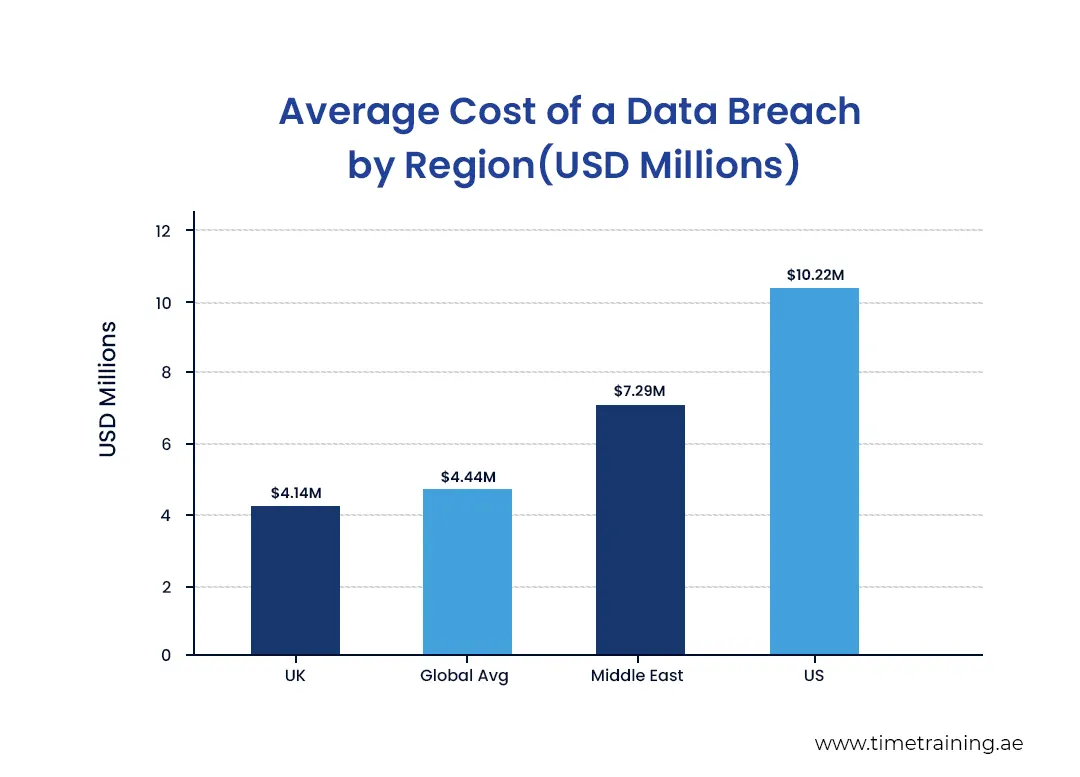
Globally, the average cost of a data breach is $4.44 million. The US average has hit an all-time high of $10.22 million, and only 4% of organisations worldwide have reached a "Mature" stage of cybersecurity readiness.
Global Cybersecurity Cost
| Region / Sector |
Average Breach Cost (USD) |
| Global average |
$4.44 million |
| United States |
$10.22 million (all-time high) |
| Middle East |
$7.29 million |
| United Kingdom |
$4.14 million |
| Healthcare (global) |
$7.42 million — 15th consecutive year as the costliest sector
|
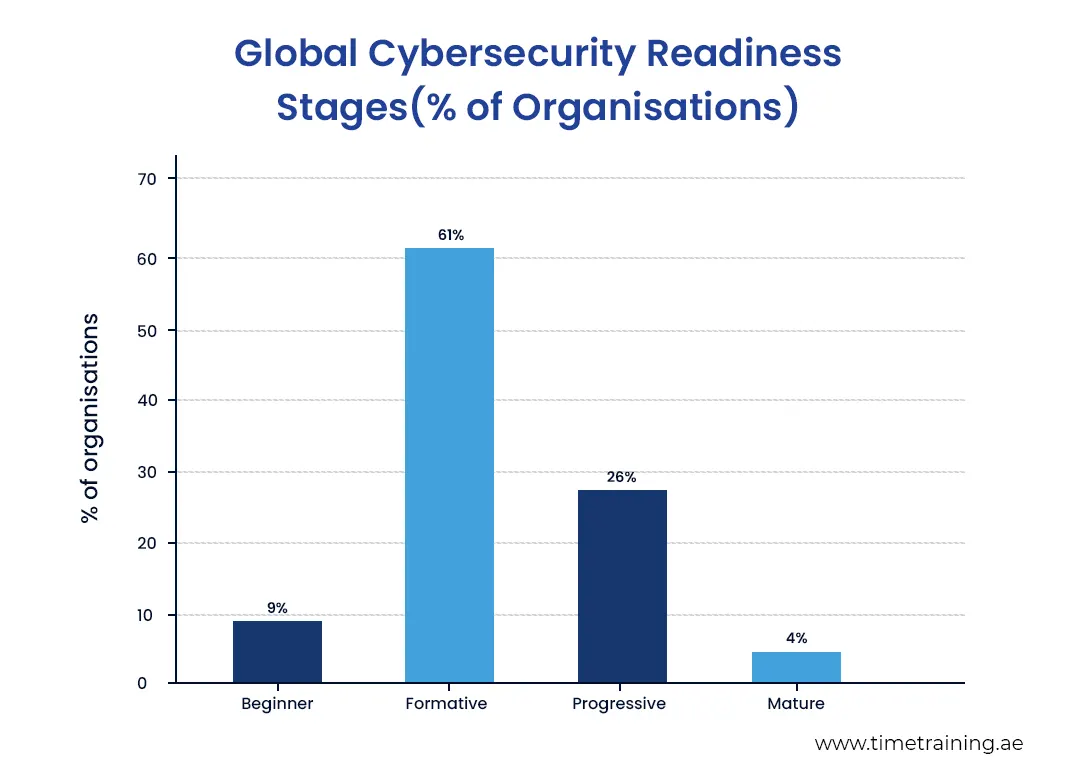
Other figures worth knowing: 86% of organisations have experienced an AI-related security incident in the past year, yet only 10% see AI security as their hardest challenge to manage, a gap that's leaving many businesses exposed. Organisations that use AI and automation extensively in their security operations save an average of $1.9 million per breach and detect incidents around 80 days faster than those that don't.
What is the Status of Cybersecurity in the UAE and Abu Dhabi
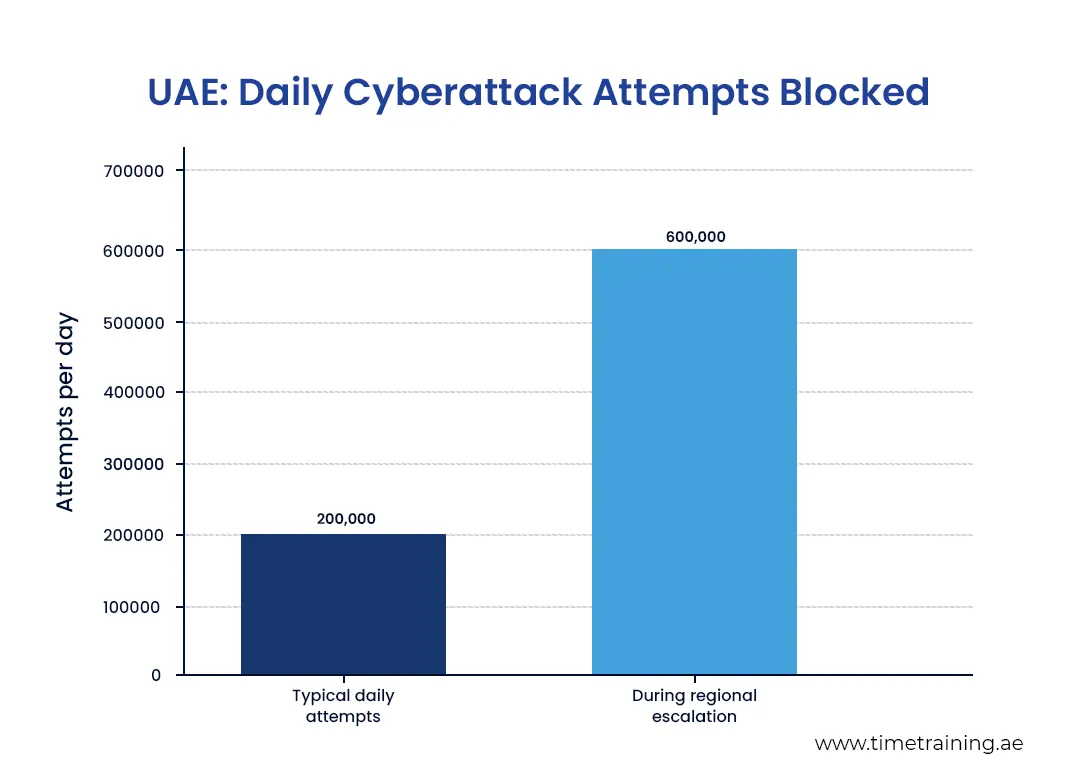
The UAE Cyber Security Council blocks between 90,000 and 200,000 cyberattack attempts every day under normal conditions ( a figure that has surged to around 600,000 during periods of regional tension), making cybersecurity skills some of the most in-demand in the country.
Abu Dhabi and the wider UAE sit at the centre of one of the world's most ambitious digital transformation journeys, smart government services, AI adoption, cloud migration and connected infrastructure across energy, transport and finance. That speed brings huge benefits, but it also widens the "attack surface" that criminals and state-linked groups try to exploit.
-
The UAE National Cyber Security Strategy 2025–2031 sets out a clear roadmap for national digital resilience, built on the pillars of Govern, Protect, Innovate, Build and Partner.
-
The UAE Cyber Security Council has reported that remote-work-related cyber incidents have risen by more than 40% in recent years, with over a third of national attacks now targeting home routers and VPNs.
-
Around 12% of all regional cyberattacks have targeted UAE organisations, with the country ranked among the most-targeted in the Middle East, largely due to its role as a global financial and digital hub.
-
Nearly half of exploited vulnerabilities in the UAE are more than five years old, highlighting the importance of basic IT hygiene and patching, not just advanced tools. Check out these top 10 powerful cybersecurity tools.
For Abu Dhabi specifically, government digitisation programmes, smart city projects and major employers such as ADNOC, ADGM-based banks, and telecom and energy giants are all actively building in-house cybersecurity teams, creating sustained, long-term demand for trained professionals based in the capital.
How Cybercrime Impacts Businesses?
A cyberattack doesn't just cost money in the moment, it causes weeks of downtime, expensive recovery work, lost customers, regulatory fines and long-term reputational damage.
When a business is hit by a serious cyberattack, the damage tends to unfold in stages:
-
Immediate disruption: systems go offline, staff can't access tools, and customer-facing services may stop completely.
-
Investigation and containment: forensic specialists need to identify how attackers got in and shut the door. This alone can cost over $1 million.
-
Recovery and rebuilding: systems need to be restored, hardened and tested, which can take weeks and cost millions for larger organisations.
-
Regulatory and legal fallout: depending on what data was exposed, organisations may face fines, mandatory notifications and even litigation.
-
Lost business: customers who lose trust often move to competitors, a cost that's harder to measure but very real.
The good news? Specific investments make a measurable difference. A regularly tested incident response plan saves an average of $2.66 million per breach, Zero Trust architecture saves around $1.76 million, and extensive use of AI and automation in security operations saves around $1.9 million, proof that preparation genuinely pays off.
What are the Cybersecurity Careers and Salaries in the UAE?
Cybersecurity is one of the fastest-growing and best-paid career paths in the UAE, with Abu Dhabi alone listing well over 1,500 active vacancies and tax-free salaries ranging from around AED 12,000 to over AED 75,000 per month depending on seniority.
Demand for cybersecurity professionals across Dubai and Abu Dhabi has accelerated sharply, driven by national strategies, rapid cloud and AI adoption, and a global shortfall of an estimated 4.8 million cybersecurity roles. Around 90% of UAE companies report a cybersecurity talent gap, which is exactly why Cybersecurity training and certification have become such a direct route into well-paid, future-proof jobs.
Cybersecurity Careers and Salaries in the UAE
| Role |
Typical Monthly Salary (AED)* |
What They Do |
| SOC Analyst |
8,000 – 18,000 |
Monitors systems for suspicious activity around the clock
|
| Security Engineer |
12,900 – 18,000 |
Builds and maintains technical defences across networks and systems
|
| Ethical Hacker / Penetration Tester |
15,000 – 30,000 |
Legally tests systems to find weaknesses before criminals do
|
| Cloud Security Specialist |
18,000 – 35,000 |
Secures cloud platforms such as AWS, Azure and Microsoft 365
|
| Incident Response Analyst |
15,000 – 30,000 |
Investigates and contains active security incidents |
| GRC Analyst (Governance, Risk & Compliance) |
12,000 – 25,000 |
Ensures the organisation meets regulatory and security standards
|
| CISO / Senior Security Leader |
35,000 – 75,000 |
Sets security strategy and reports to the board |
*Figures are approximate ranges based on UAE hiring and salary reports for 2026 and will vary by experience, employer and certifications held.
You may also check out these most in-demand cybersecurity jobs.
Why Do Cybersecurity Certifications Matter?
Cybersecurity Certifications matter because UAE employers consistently prefer them over degrees alone. They prove you have validated, up-to-date, hands-on skills, and globally, 91% of IT decision-makers say technology certifications give candidates an edge.
If you're starting or switching careers, the right certification can be the fastest way to be taken seriously by employers. Some of the most valuable starting points include:
-
CompTIA Security+: It is widely recognised as the foundation certification for entry-level cybersecurity roles.
-
Certified Ethical Hacker (CEH): Ideal for those interested in penetration testing and offensive security.
-
CISSP: It’s a globally respected qualification for experienced security managers and architects.
-
ITIL 4 Foundation: It’s useful for IT service management roles that intersect with security operations.
-
Cloud security certifications: Increasingly essential as more UAE organisations migrate to AWS, Azure and Microsoft 365.
Explore this guide on best cybersecurity certifications and get in touch with us to discuss the right pathway for your goals.
How AI can Affect the Future of Cybersecurity?
AI is both the biggest new threat and the biggest new defence in cybersecurity, and the organisations winning are the ones that govern their AI use as carefully as they govern their networks.
Looking ahead, several trends are shaping how cybersecurity will evolve over the next decade:
-
Agentic AI security: AI "agents" that can detect and respond to threats automatically, in seconds rather than hours.
-
Zero Trust everywhere: It’s a "never trust, always verify" approach becoming the default for networks, devices and users.
-
AI governance: Formal policies to prevent "Shadow AI", staff using unapproved AI tools with company data, which currently adds hundreds of thousands of dollars to breach costs when things go wrong.
-
Digital identity protection: Stronger verification to counter AI-generated deepfakes and synthetic identities.
-
Post-quantum cryptography: Early preparation for encryption methods that can withstand future quantum computing power.
For professionals, this means continuous learning isn't optional; it's the job. The good news is that organisations using AI-powered security tools are already detecting threats roughly 80 days faster than those relying on manual processes, which is exactly the kind of skill set employers in the UAE are now hiring for.
How to Protect Yourself and Your Organisation from Cyberthreats?
Strong passwords, multi-factor authentication, regular software updates, staff awareness training and a tested incident response plan remain the most effective and affordable ways to reduce cyber risk.
For individuals:
-
Use unique, strong passwords and a password manager.
-
Turn on multi-factor authentication (MFA) wherever it's offered.
-
Be cautious with links and attachments, even ones that look like they're from people you know.
-
Keep your devices, apps and home router updated and use a trusted VPN if working remotely.
For organisations:
-
Run regular staff awareness training, most breaches still start with a human clicking the wrong link.
-
Build and test an incident response plan before you need it.
-
Apply Zero Trust principles to networks, cloud platforms and devices.
-
Patch known vulnerabilities promptly, especially older ones, which remain a common entry point in the UAE.
-
Create a clear AI usage policy to prevent "Shadow AI" risks.
Whether you're protecting your own digital life or building a security culture across your organisation, structured training makes a measurable difference. Browse our full range of IT and security courses on the Time Training Center to arrange Corporate training for your team.
Final Thoughts
Cybersecurity isn't just an IT issue anymore. It's a business issue, a career opportunity, and increasingly, a personal responsibility. With the UAE pushing ahead on digital transformation while facing some of the highest attack volumes in the region, Abu Dhabi-based professionals and businesses have a genuine opportunity to lead rather than follow when it comes to cyber resilience.
Whether you're an individual looking to switch into a high-demand, well-paid career, or a business leader wanting to upskill your team, the path forward starts with the right knowledge and the right certification.
Frequently Asked Questions
What is cybersecurity?
Cybersecurity is the practice of protecting networks, devices, applications and data from unauthorised access, cyberattacks, theft and disruption.
Why is cybersecurity important?
It's important because it protects sensitive data, prevents financial losses, maintains business continuity, safeguards customer trust, and reduces the risk of increasingly sophisticated cyberattacks.
What are the main types of cybersecurity?
The main types are network security, cloud security, application security, endpoint security, information security, operational security, mobile security and IoT security.
What is the biggest cyber threat today?
Phishing remains the most common starting point for attacks, responsible for the majority of breaches globally and in the UAE, often combined with ransomware once attackers gain access.
What is ransomware?
Ransomware is malware that encrypts an organisation's files and demands payment for their release. The ransom itself is typically only around 15% of the total cost of an attack.
How many cyberattacks does the UAE face each day?
The UAE Cyber Security Council typically blocks between 90,000 and 200,000 attack attempts daily, with this figure rising significantly during periods of heightened regional activity.
Is cybersecurity a good career in the UAE?
Yes. Cybersecurity is one of the fastest-growing career paths in the UAE, with thousands of active vacancies in Dubai and Abu Dhabi, tax-free salaries, and a significant ongoing skills shortage. Here you can find out four best cybersecurity career paths.
What is the average cybersecurity salary in the UAE?
Salaries vary widely by role and experience, ranging from around AED 8,000–18,000 per month for entry-level roles to AED 35,000–75,000+ per month for senior leadership positions such as CISO.
Which cybersecurity certification should I start with?
CompTIA Security+ is a popular starting point for beginners, while CEH and cloud security certifications suit those moving into more specialised roles.
How does AI affect cybersecurity?
AI is used by attackers to create more convincing phishing emails and deepfakes, but it's also used by defenders to detect and respond to threats roughly 80 days faster than manual methods.
What is Zero Trust security?
Zero Trust is a security model based on "never trust, always verify", every user and device must be authenticated and authorised, regardless of whether they're inside or outside the network.
What is Shadow AI and why does it matter?
Shadow AI refers to employees using unapproved AI tools with company data. It's linked to an average extra cost of around $670,000 per breach due to weak access controls and data exposure.
How can small businesses improve their cybersecurity?
Start with the basics: strong passwords, MFA, regular software updates, staff training and a simple incident response plan, these steps prevent the majority of common attacks.
Does the UAE have a national cybersecurity strategy?
Yes. The UAE National Cyber Security Strategy 2025–2031 outlines a national framework built on governance, protection, innovation, capability-building and partnerships.
How long does training take to start a cybersecurity career?
Many foundational certification courses can be completed in a matter of weeks through flexible Classroom or Live Online formats, making it possible to start applying for entry-level roles relatively quickly.
 +971 2 6713828