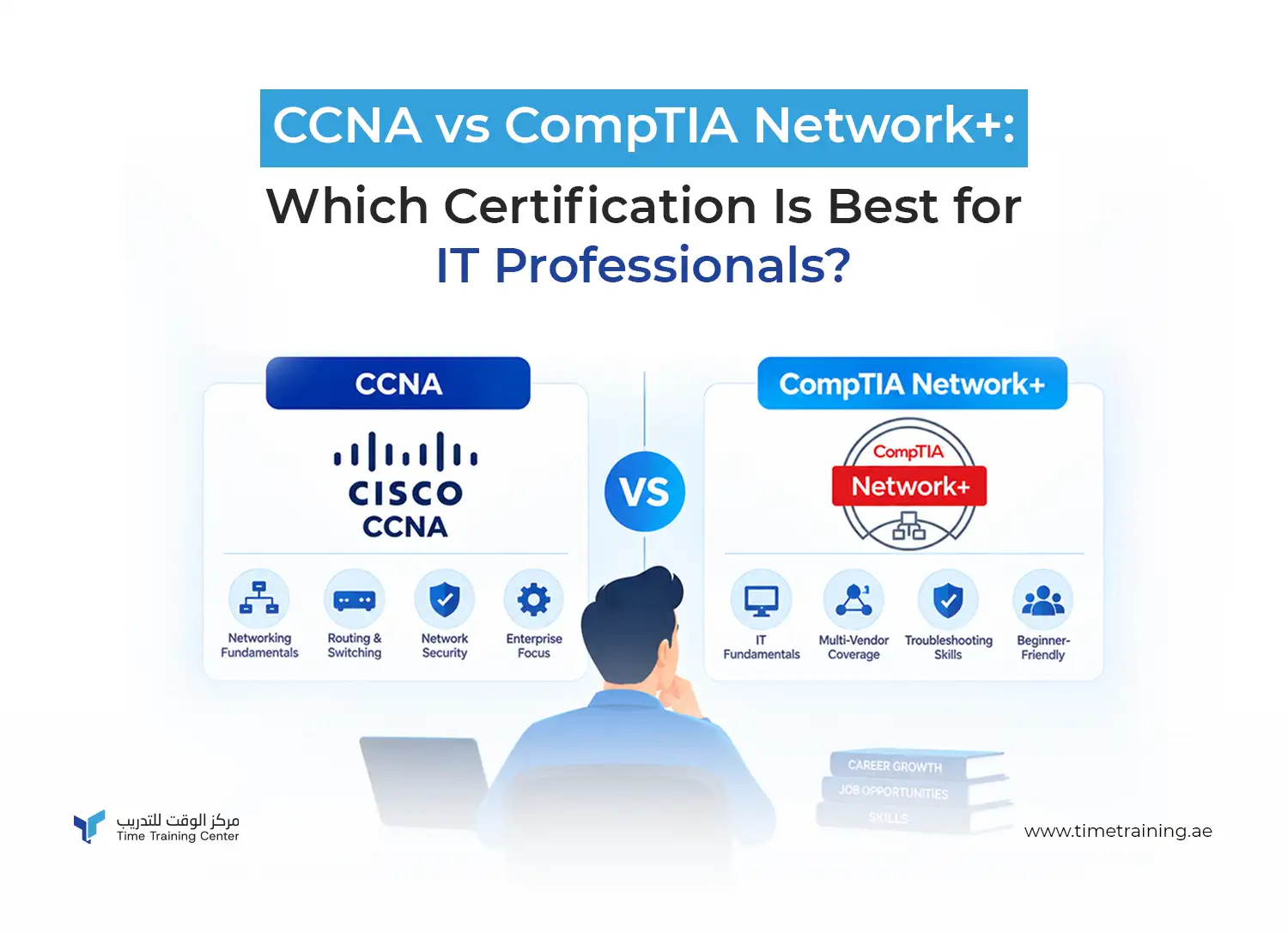
CCNA vs CompTIA Network+ depends on your goal. Choose Network+ if you are new to IT and want a vendor-neutral start. Choose CCNA if you want deeper, hands-on Cisco skills for network engineer roles.
Many people take Network+ first, then CCNA. Both are valid. Your target employer decides the winner.
It is 9 a.m. in an Abu Dhabi office. Emails stop sending. The Wi-Fi drops. Someone shouts, "Is the network down?" Then everyone looks at one person.
That person knows how networks work. Chances are, they hold a certification. And their first big question was the one you are asking now: CCNA vs CompTIA Network+.
Both are respected. Both teach real skills. But they are not the same. This guide explains the difference in plain words, so you can choose with confidence.
|
Table of Contents
|
|
1. What Is the Difference Between CCNA and CompTIA Network+?
1.1. What Is the Cisco CCNA Certification?
1.2. What Is the CompTIA Network+ Certification?
2. Is CCNA Harder Than CompTIA Network+?
2.1. How Do the Exams Compare?
2.2. How Long Does Preparation Take?
3. Which Networking Certification Is Best for Beginners?
3.1. Should I Get CCNA or Network+ First?
4. CCNA vs Network+ Career Opportunities in Abu Dhabi
4.1. What Jobs Can You Get With CCNA?
4.2. What Jobs Can You Get With Network+?
4.3. What Do Abu Dhabi Employers Look For?
5. How Do You Choose Between CCNA and Network+?
6. Key Takeaways
7. FAQs: CCNA vs CompTIA Network+ 1.
|
What Is the Difference Between CCNA and CompTIA Network+?
CCNA is a Cisco certification with great, hands-on skills. Network+ is vendor-neutral and covers basics across many brands.
Think of it like learning to drive. Network+ teaches you the rules of the road for any car. CCNA teaches you to drive one brand very well, and drive it hard.
Not sure where Network+ fits among other credentials? This guide to CompTIA certifications shows the full ladder.
What Is the Cisco CCNA Certification?
CCNA stands for Cisco Certified Network Associate. It proves you can set up, run, and fix networks, with a focus on Cisco tools.
The exam code is 200-301. It covers network basics, IP connectivity, IP services, security, and automation. You learn to configure routers and switches. It is practical and detailed.
What Is the CompTIA Network+ Certification?
CompTIA Network+ proves you understand core networking ideas and can troubleshoot problems on any vendor's equipment.
The current exam is N10-009. It covers networking concepts, implementation, operations, security, and troubleshooting. It does not tie you to one brand.
CCNA vs Network+ Comparison Table
| Feature |
CCNA |
CompTIA Network+
|
| Issued by |
Cisco |
CompTIA |
| Focus |
Cisco-based, hands-on |
Vendor-neutral |
| Exam code |
200-301 |
N10-009 |
| Exam time |
120 minutes |
Up to 90 minutes
|
| Level |
Associate |
Entry to intermediate
|
| Best for |
Network engineers |
Support staff, admins
|
| Validity |
3 years |
3 years |
Is CCNA Harder Than CompTIA Network+?
Yes, for most people. CCNA goes deeper and expects you to configure and troubleshoot. Network+ is wider but lighter.
Network+ asks you to know a lot of topics. CCNA asks you to know fewer topics, but in much greater depth. Subnetting, routing, and switching show up everywhere in CCNA.
How Do the Exams Compare?
Both mix multiple-choice and practical questions. CCNA runs longer and tests configuration skills more rigorously.
Network+ includes performance-based questions. These are small tasks, not just theory. CCNA has simulations too, and they feel tougher. If you freeze on subnetting, start practicing early.
Studying for CCNA? These CCNA exam preparation tips will help you plan your weeks.
How Long Does Preparation Take?
Most beginners need around two to three months for Network+ and three to five for CCNA, studying a few hours each week.
These are rough guides. Your background matters most. Someone who already works on a help desk will move faster.
For the CompTIA side, here is how to prepare for the CompTIA exam step by step. Use practice labs, not just videos. You learn networking by touching it.
Which Networking Certification Is Best for Beginners?
Network+ is the easier start for true beginners. CCNA works for beginners too, if you are ready for a steeper climb.
Be honest with yourself. If terms like "IP address" and "router" feel new, begin with Network+. A guided class like CompTIA Network+ training in Abu Dhabi can speed things up, because you practice with an instructor instead of guessing alone.
If you already know the basics, you can jump to CCNA.
Should I Get CCNA or Network+ First?
Get Network+ first if you are new to IT. Get CCNA first if you already have networking experience or want Cisco roles right away.
You do not need Network+ before CCNA. Cisco has no such rule. But Network+ builds a solid base, and that makes CCNA feel less scary.
Starting from zero? Look at the benefits of CompTIA A+. It covers hardware and support basics, and many learners take it before Network+.
Pros and Cons at a Glance
| |
Pros |
Cons |
| CCNA |
Great skills, strong Cisco value, clear engineer path |
Harder, more study time
|
| Network+ |
Beginner-friendly, works with any vendor, wide coverage |
Less depth, fewer configuration skills
|
CCNA vs Network+ Career Opportunities in Abu Dhabi
Both lead to IT jobs. Network+ suits support and admin roles. CCNA suits network engineer roles. Abu Dhabi's push for digital growth keeps demand for both strong.
Abu Dhabi is building smart-city systems, cloud services and secure government networks. All of that runs on solid networks. And networks need people.
The talent gap is global. Reports cited by Business Chief estimate as many as 4 million unfilled cyber jobs worldwide. Networking sits right next to security. Both certifications include security topics, so your skills carry over.
What Jobs Can You Get With CCNA?
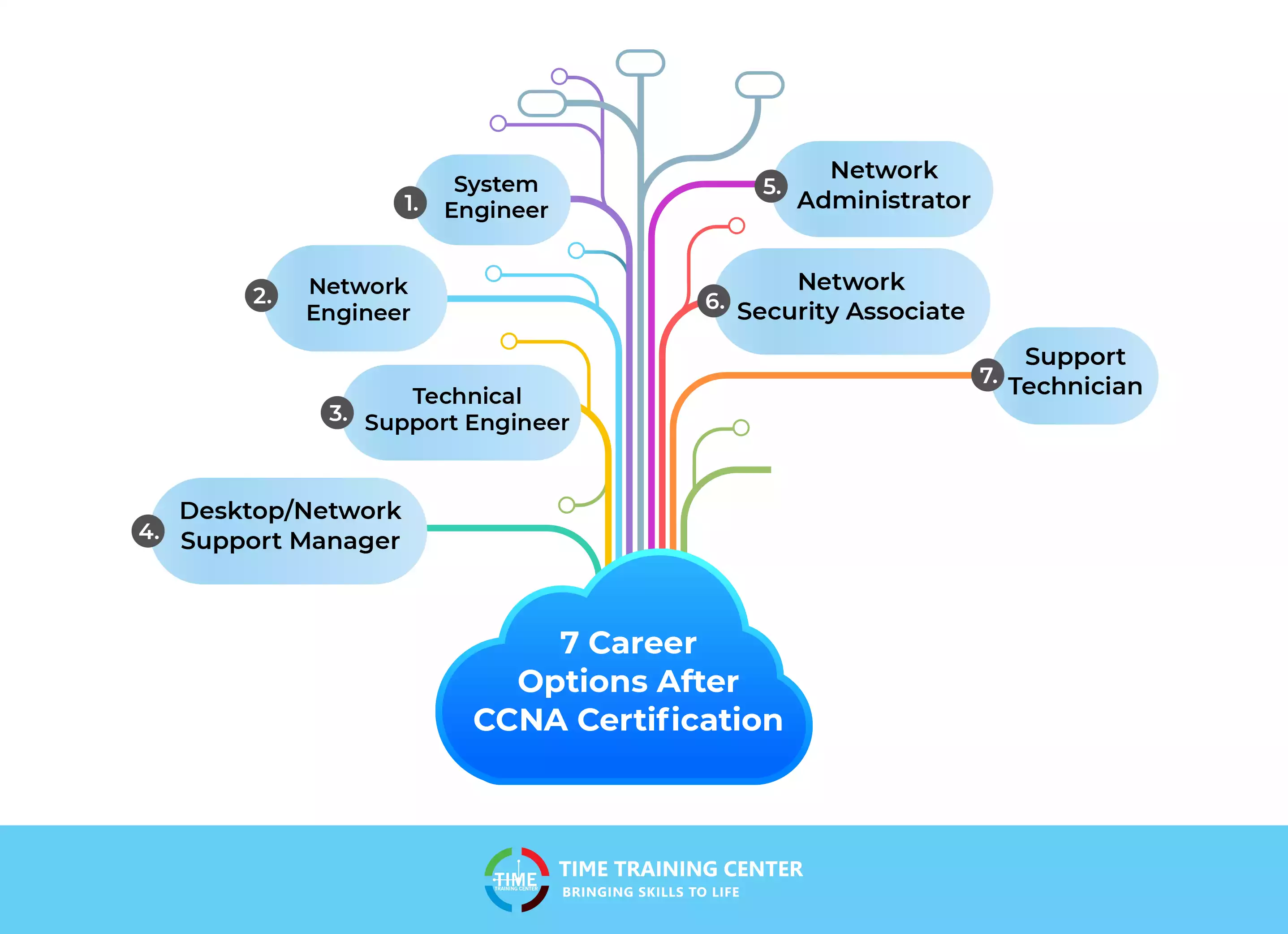
CCNA leads to roles like network engineer, network administrator, and support engineer.
Many holders move into engineering or security later. If you want specifics, here are the top career options after CCNA.
What Jobs Can You Get With Network+?
Network+ leads to roles like help desk technician, network support technician, and junior administrator.
It is a strong way into IT. Want to see how roles and pay line up? Check this breakdown of CompTIA job roles and salary.
What Do Abu Dhabi Employers Look For?
Employers want proof you can do the work, not just pass tests. Certifications help, but hands-on skill closes the deal.
The UAE's leaders say this often. Mohamed Al Kuwaiti, Head of Cybersecurity for the UAE Government, said cybersecurity supports "the resilience of our digital infrastructure and economy."
He made the point when NYU Abu Dhabi signed an agreement with the UAE Cyber Security Council.
The Council has made the same point about training. In its 2026 announcement with IBM, it said skills must be ones "that can be applied in the real world." The IBM SkillsBuild program offers more than 1,000 courses, from cybersecurity to cloud.
Local talent matters too. Speaking at an event in Abu Dhabi years ago, RSA Security president Amit Yoran said, "I wouldn't underestimate the region's ability to cultivate and grow its own talent." Today's training programs prove him right.
Experts in Abu Dhabi keep repeating one message: practical skills beat paper alone. Pick a certification that makes you practice, then build a home lab to prove it.
Hands-on practice is what turns a certificate into a job offer.
That is why many learners choose a lab-based CCNA certification course in Abu Dhabi, where they configure real routers and switches instead of only reading about them.
How Do You Choose Between CCNA and Network+?
Match the certification to your starting point and your target job. Beginners tend to lean towards Network+. Future network engineers lean toward CCNA.
Decision Matrix
| Your situation |
Best choice |
| New to IT, no experience |
Network+ |
| Help desk worker moving up |
Network+, then CCNA
|
| Want a network engineer job |
CCNA |
| Employer runs Cisco equipment |
CCNA |
| Unsure about vendor |
Network+ |
| Already know networking basics |
CCNA |
Practical Examples
Real situations make the choice easier. Here are three.
-
Fatima, fresh graduate: She has no IT job yet. She signs up for CompTIA Network+ certification in Abu Dhabi to get interviews for support roles. She plans to add CCNA later.
-
Priya, IT manager: She works with mixed equipment from many brands. Network+ gives her broad, practical coverage.
-
Omar, help desk technician: He resets passwords daily and wants more. He joins CCNA training in Abu Dhabi to practice on real routers and move into network engineering.
Key Takeaways
-
CCNA vs CompTIA Network+ is not about which is "better." It is about which fits you.
-
Network+ is vendor-neutral and easier for beginners.
-
CCNA is deeper, harder, and Cisco-focused.
-
Many people take Network+ first, then CCNA.
-
Abu Dhabi employers value hands-on skills. Practice in labs.
-
Check what your target employer uses before you decide.
FAQ's
1. Which is better, CCNA or CompTIA Network+?
CCNA is better for professionals who want to specialise in Cisco networking, routing, and switching. CompTIA Network+ is better for beginners seeking broad networking knowledge across different technologies and vendors.
2. Is CCNA harder than CompTIA Network+?
Yes, CCNA is generally considered more challenging because it covers networking concepts in greater depth, including routing, switching, network configuration, and troubleshooting. CompTIA Network+ focuses on foundational networking knowledge and is often more suitable for beginners.
3. Should I take Network+ before CCNA?
Taking CompTIA Network+ before CCNA can help beginners build a strong networking foundation. However, it is not mandatory. Candidates with basic networking knowledge can prepare directly for CCNA.
4. Which certification is better for a network engineer, CCNA or Network+?
CCNA is generally better for aspiring network engineers because it develops practical skills in configuring, managing, and troubleshooting network infrastructure. CompTIA Network+ is useful for entry-level IT support and networking roles.
5. Can I get a job with CompTIA Network+ or do I need CCNA?
CompTIA Network+ can help candidates qualify for entry-level roles such as network support technician, IT support specialist, and junior network administrator. CCNA can strengthen applications for network administrator, network engineer, and Cisco networking roles. Job requirements vary by employer.
6. What is the difference between CCNA and CompTIA Network+ certification?
The main difference is their focus. CCNA is a Cisco certification that emphasises networking technologies, configuration, and troubleshooting, while CompTIA Network+ is vendor-neutral and covers networking concepts applicable across different environments. Both certifications validate networking knowledge, but the best choice depends on your career goals and existing skills.
 +971 2 6713828