CCNA skills are in high demand in Abu Dhabi as secure and reliable networks are essential to the operation of cloud services, business systems, communication and digital operations for organisations. CCNA knowledge is about networking fundamentals, routing and switching, IP connectivity, troubleshooting, security fundamentals, and network automation.
In simple terms, CCNA skills enable a person to understand how computers, servers, Wi-Fi and office systems stay connected. If you know CCNA and a network goes down, you can find the problem and fix it.
Abu Dhabi is a digital economy and is a hub for ICT innovation. It has a high-tech sector with IT, telecommunications, artificial intelligence and other related industries. However, the demand for CCNA skills will depend on the employer, the job, the practical experience and the industry. CCNA skills are a good foundation, not a guarantee of a job.
What Are the Important CCNA Skills?
CCNA stands for Cisco Certified Network Associate. It is a Cisco networking certification that teaches the basics of building, managing, and troubleshooting computer networks.
The current CCNA exam is 200-301 CCNA v1.1. It is a 120-minute exam and covers network fundamentals, network access, IP connectivity, IP services, security fundamentals, and automation and programmability.
A network is like a road system. The computer, printer, phone and server are vehicles. Junctions and traffic lights in your network are switches, routers, and Wi-Fi access points. The CCNA skills provide a person with an understanding of traffic flow and what to observe when it gets stuck. A CCNA Course in Abu Dhabi covers routing, switching, network security, IP services, automation, and programmability and can help you get your career started!
Core Areas Covered by CCNA
| CCNA Skill Area |
Simple Meaning |
Why It Matters |
| Network fundamentals |
Learning about routers, switches, cables, LANs, WANs, and IP addresses |
Builds the base for all networking knowledge
|
| Network access |
Setting up switches, VLANs, Wi-Fi, and device connections |
Helps users and devices connect to the network
|
| IP connectivity |
Understanding routing and how data moves between networks |
Keeps offices, branches, and cloud systems connected
|
| IP services |
Working with DHCP, NAT, and network management tools |
Supports daily internet and business communication
|
| Security fundamentals |
Learning access control, threats, and basic protection methods |
Helps reduce common network risks
|
| Automation and programmability |
Understanding how networks can be managed using automation |
Useful for larger and modern networks
|
Official Cisco exam topics are: Routing and switching concepts, IP addressing, VLANs, wireless networking, device access, access control lists, and security features such as DHCP snooping and port security. Looking for CCNA exam prep? See this guide on 10 Tips to Pass the CCNA Certification Exam in 2026.
Why Networking Skills Matter in Abu Dhabi
Many services in Abu Dhabi depend on networks. Banks need secure payment systems. Hospitals need reliable access to patient records. Schools need internet for online learning. Businesses need networks for email, cloud storage, video calls, and internal software.
Abu Dhabi’s government also operates a Unified Government Data Centre in Khalifa City. It supports the digital infrastructure of the Abu Dhabi Government, with a disaster recovery site in Al Ain. This shows why stable IT infrastructure and skilled network professionals matter.
The emirate’s advanced technology sector is closely linked to IT, telecom, artificial intelligence, and innovation-based companies. As organisations adopt more cloud platforms, smart devices and digital services, they need people who can manage LANs, WANs, Wi-Fi and network security.
Sectors That Rely on Network Infrastructure
| Sector |
Examples of Network Use
|
| Government |
Digital services, data centres, internal systems, and public portals
|
| Banking and finance |
Secure transactions, branch connectivity, and data protection
|
| Healthcare |
Hospital systems, patient records, telemedicine, and connected devices
|
| Education |
Online learning, campus Wi-Fi, and administrative systems
|
| Aviation and transport |
Ticketing, operations, communications, and security systems
|
| Energy and utilities |
Monitoring systems, industrial networks, and remote operations
|
| Retail and hospitality |
POS systems, guest Wi-Fi, inventory systems, and online bookings
|
| Telecom and IT services |
Enterprise networking, cloud services, and managed IT support
|
What are the Key CCNA Skills Employers Seek?
CCNA training is not only about passing the exam. It also builds practical knowledge for real-world IT work.
Routing is how data moves between different networks. Switching enables devices on the same network to communicate with each other. Together, they are the backbone of enterprise networking.
For example, routing allows one office branch to connect to the head office server. Switching allows computers, printers and Wi-Fi access points to talk to each other within the same office LAN.
-
Addressing and IP Connectivity
IP connectivity is about making sure devices can talk to each other using IP addresses. CCNA students study IPv4, IPv6, subnetting and static routing.
Almost every device that you use at work needs an IP address. Computers, printers, CCTV cameras, Wi-Fi access points and servers all need the correct IP settings.
Network configuration means setting up devices so that they function properly. This might include configuring switches, routers, VLANs, wireless settings and device access.
Good configuration will reduce connection issues. It also helps IT teams to manage large networks in an organised way.
Network troubleshooting means finding out why a network is slow, disconnected, or unreachable.
Imagine a company where staff cannot open a cloud accounting tool. A person with CCNA knowledge can check the computer, switch port, IP settings, router, firewall rule, and internet connection step by step. This is more useful than simply restarting the device.
Wireless networking is common in offices, malls, hotels, hospitals, and campuses. CCNA covers wireless principles, wireless architectures, and WLAN configuration.
This knowledge helps IT teams provide stable Wi-Fi while managing coverage, security, and user access.
-
Network Security Fundamentals
CCNA is not a complete cybersecurity certification. But it teaches useful security basics such as threats, vulnerabilities, device passwords, access control lists, VPN concepts, and wireless security protocols.
This matters because a badly configured switch or router can create security risks even if the company uses security software.
Modern networks can have hundreds of devices. Manual configuration takes time and can cause mistakes. CCNA introduces automation and programmability, which helps IT teams manage repetitive tasks more efficiently.
A beginner does not need to become a programmer. The goal is to understand how automation can support network operations and reduce manual work.
CCNA Skills vs General IT Support Skills
General IT support skills and CCNA skills overlap, but they are different. Both are useful for people starting an IT career.
| Area |
General IT Support Skills |
CCNA Networking Skills
|
| Main focus |
Helping users with devices, software, and access issues |
Building, managing, and troubleshooting networks
|
| Typical tasks |
Installing software, resetting passwords, handling tickets, setting up computers |
Configuring routers and switches, managing IP addressing, checking connectivity
|
| Hardware knowledge |
Laptops, desktops, printers, and peripherals |
Switches, routers, access points, cables, and network devices
|
| Troubleshooting |
Application errors, login issues, and device problems |
Network downtime, routing issues, VLAN problems, and connectivity faults
|
| Security knowledge |
Basic user access and endpoint security |
Network-level security fundamentals, ACLs, and device access control
|
| Career direction |
IT helpdesk, desktop support, IT support technician |
Network administrator, network engineer, infrastructure support roles
|
Many IT support professionals learn CCNA skills to move beyond basic device support. It helps them understand the network behind the applications and systems people use every day.
How CCNA Skills Support IT Careers
CCNA skills can support different career paths, especially for people interested in IT infrastructure in Abu Dhabi.
| Career Direction |
How CCNA Skills Help
|
| IT support technician |
Helps understand connectivity issues beyond the user’s computer
|
| Network administrator |
Builds skills in switches, routers, IP addressing, and network monitoring
|
| Network engineer career |
Creates a foundation for advanced routing, switching, and infrastructure work
|
| System administrator |
Helps manage servers, connectivity, and internal business networks
|
| Cybersecurity beginner |
Provides network knowledge needed to understand traffic, access, and vulnerabilities
|
| Cloud and infrastructure roles |
Supports understanding of how office networks connect to cloud platforms
|
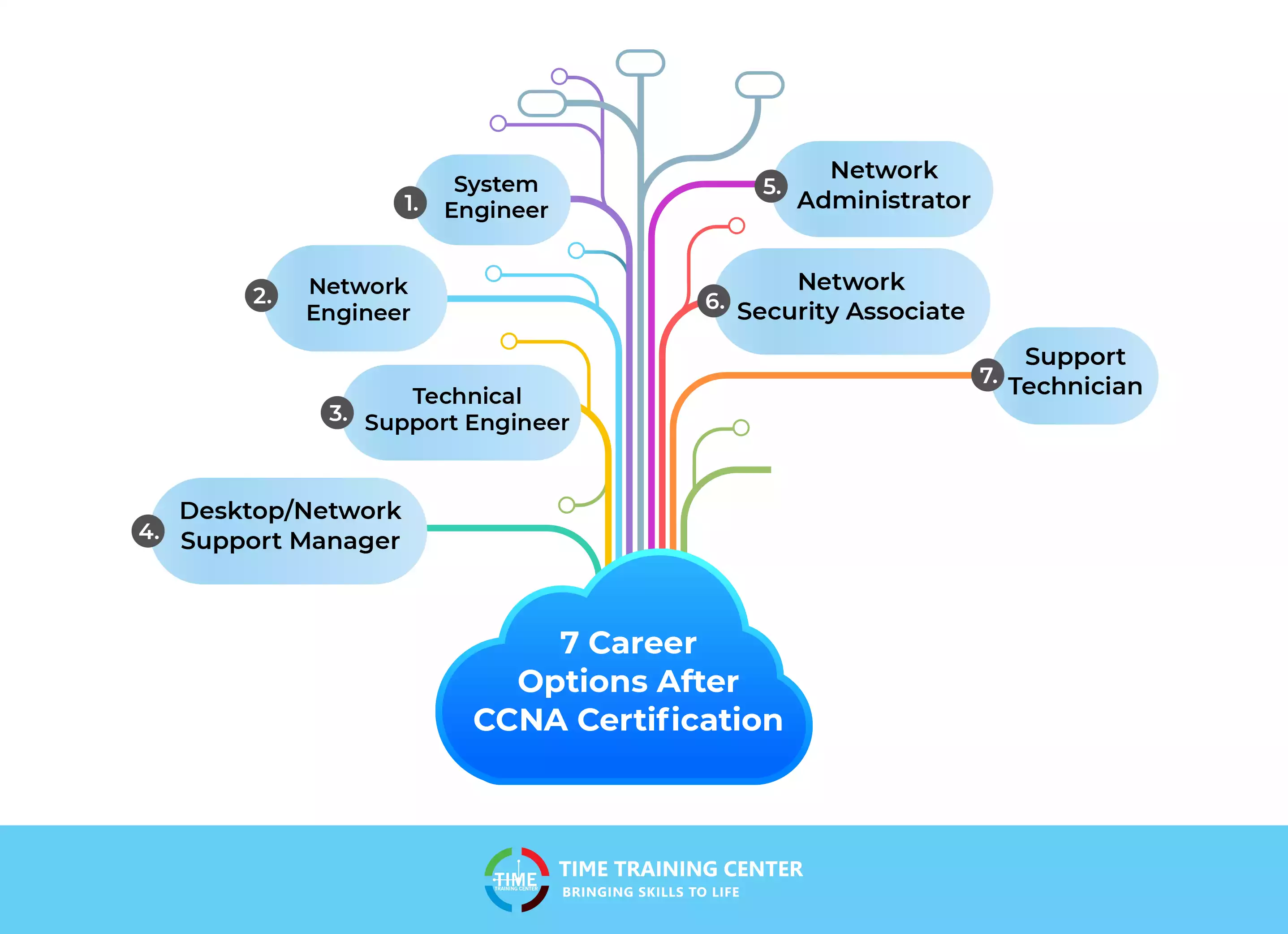
CCNA is an associate-level Cisco certification. Cisco also offers professional and expert-level networking certifications for people who want to specialise further. After building skills, this article on Top 7 Job Profiles You Can Go With After CCNA Certification may help with career planning.
Why CCNA Practical Labs Matter
Reading theory alone is not enough. Networking becomes easier when learners configure devices and solve problems.
Practical labs may include:
-
Making VLANs on Switches
-
Configuring IP addresses and testing connectivity
-
Setting up static routes
-
Basic router/switch security configuration
-
Troubleshooting a network that can't access the Internet
-
Wireless network settings work
-
Basic network automation concepts exercises
Hands-on practice helps learners understand what happens when a network goes down. It also develops confidence for real workplace tasks. Cisco Modelling Labs is cited by Cisco as a solution for designing, building, and troubleshooting network environments.
CCNA Certification: Benefits and Limits
CCNA certification can help, but it should be seen as one part of career development.
Benefits of CCNA Certification
-
Tests fundamental Cisco Networking knowledge.
-
It gives a structure to study networking concepts.
-
This includes IP connectivity, routing, switching, security and automation.
-
It can help with career development for IT support and networking positions.
-
It helps novices build a good technical foundation.
Limitations of CCNA
-
Certification is no guarantee of a job, a raise or a promotion.
-
Employers may also be seeking practical experience, communication skills and problem-solving ability.
-
CCNA does not make you a full cybersecurity expert or a senior network engineer.
-
Other qualifications, experience or specialised skills may be required for more senior positions.
-
Networking technology is changing. You need to keep learning.
The best way is to mix CCNA learning with labs, real projects, internships where possible and continuous practice.
Why CCNA Skills Are Relevant in the UAE
The UAE is investing in digital transformation, AI, automation and advanced technology. Abu Dhabi’s high-tech industry is deeply embedded with the IT, telecom, AI and other innovation-based sectors.
As organisations embrace more cloud services, connected devices and digital platforms, they need people who can keep networks stable and secure. This is where CCNA networking skills come in.
But the job requirements vary from company to company. Some employers may require CCNA certification. Others may like to get their hands dirty with networking. Encourage learners to read job descriptions and develop skills that are relevant to the positions for which they hope to qualify.
How to Choose CCNA Training in Abu Dhabi
Choosing the right CCNA course in Abu Dhabi is important. A good course should teach both theory and practical skills.
| Factor |
What to Look For
|
| Content of the course |
What is covered in the current CCNA topics, such as security and automation
|
| Hands-on experience |
Labs for routers and switches; practice troubleshooting and real scenarios
|
| Trainer experience |
Trainers who can explain concepts in simple language
|
| Learning support |
Sessions for doubt clearance, practice questions and revision support
|
| Flexibility |
Evening, weekend, online or classroom options to fit your schedule
|
| Career guidance |
Guidance on certifications, labs, and next learning steps
|
| Updated syllabus |
Training based on the latest Cisco CCNA exam topics
|
Before you join, ask if students get to use the labs. Also enquire about how the course covers IP connectivity, routing & switching, network security and troubleshooting.
For structured learning, readers can check out Time Training CCNA Course. It might be a practical option for beginners and working professionals who want to build networking and troubleshooting skills.
Tips for CCNA Beginners
-
Start with networking basics before advanced topics.
-
Learn IP addressing and subnetting properly.
-
Practise router and switch configuration regularly.
-
Do not memorise commands without understanding them.
-
Use lab practice to test what you learn.
-
Learn how to troubleshoot step by step.
-
Read current Cisco exam topics before preparing for certification.
-
Keep learning after certification because networking tools change.
Final Thoughts
CCNA skills matter because networks form the foundation of modern IT systems. They help the professional understand how the device connects, how data flows, and how to troubleshoot when connectivity fails.
The reason CCNA skills are important is that networks are the basis of modern IT systems. They help the professional understand how the device connects, how data flows and troubleshooting when connectivity is lost.
Networking knowledge is a great boost to IT careers, especially in Abu Dhabi where digital infrastructure is the backbone of business and government services. Certification is the beginning. The hands-on labs, troubleshooting practice and continued learning are what make the real difference.
FAQ's
Are CCNA skills good for beginners?
Yes. CCNA skills are beginner-friendly as they start with the basics of networking. Learners can learn about IP addressing, routing, switching and troubleshooting.
Does CCNA certification get you a job in Abu Dhabi?
No. CCNA certification does not mean a job. They also think about practical skills, experience, communication and the needs of the particular job.
What does the CCNA course include?
Today, the Cisco CCNA exam covers the following topics: network fundamentals, network access, IP connectivity, IP services, security fundamentals, automation and programmability.
Is CCNA just for network engineers?
No. CCNA knowledge is also useful to IT support technicians, system administrators, helpdesk professionals and those who are looking to get into cybersecurity or cloud-related roles.
Is CCNA sufficient for a career in security?
The CCNA cert provides great fundamentals in networking and security, just not for all cybersecurity positions. Cybersecurity roles typically require additional security knowledge, tools, and hands-on experience.
Can CCNA help IT support professionals grow?
Yes. CCNA skills can help IT support professionals to understand network issues better. This can help guide you toward roles in network administration or infrastructure.
Is there CCNA training in Abu Dhabi?
Yes. Learners can contact Time Training to explore CCNA Training in Abu Dhabi. - Practical labs - Updated Cisco networking topics. A good programme should have
 +971 2 6713828