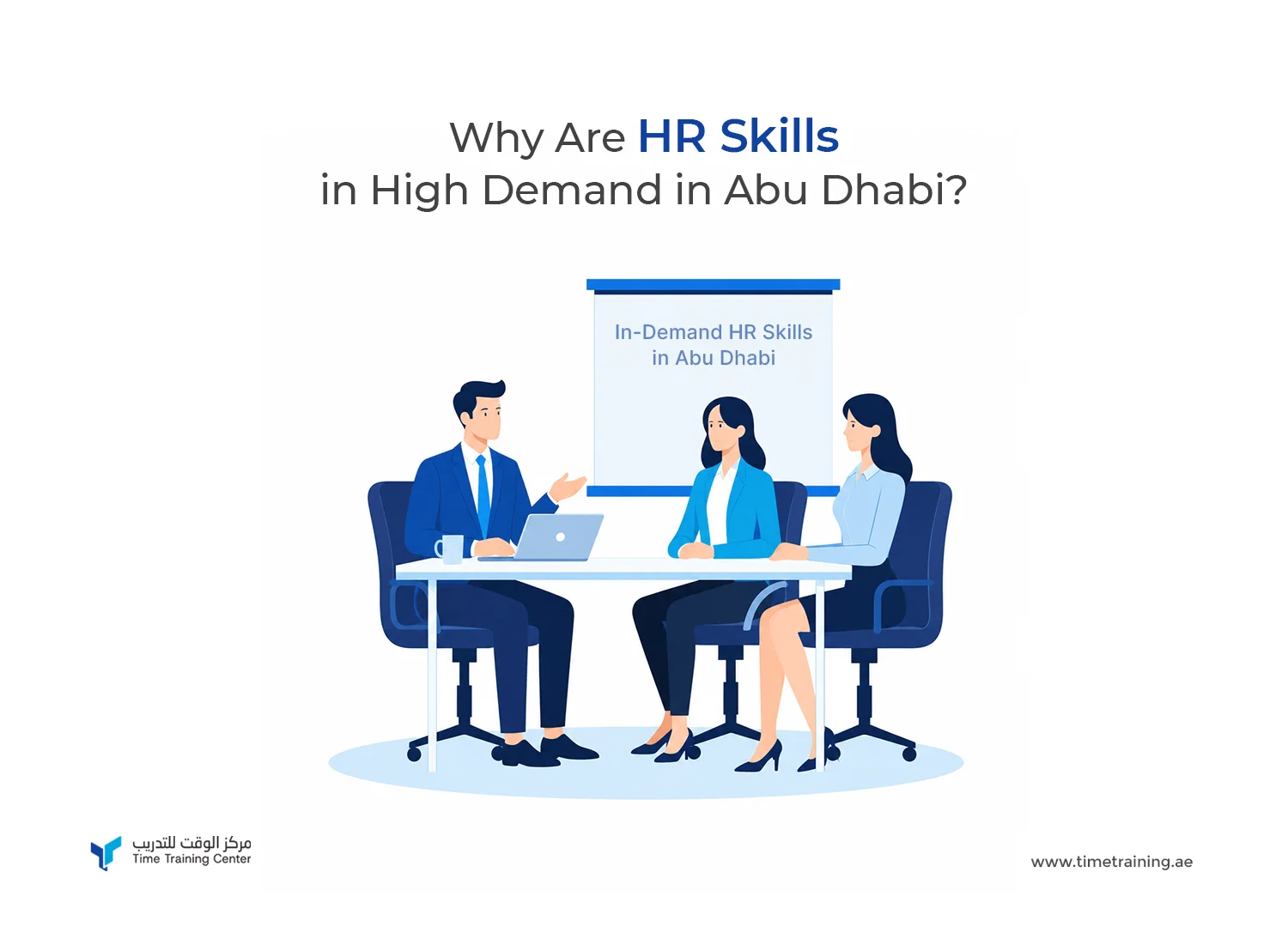
HR skills are in high demand in Abu Dhabi because businesses need qualified professionals to manage recruitment, payroll, employee relations, and workforce planning while complying with UAE employment regulations.
As organisations expand, effective human resource management becomes essential to business operations.
According to Middle East Magazine, Abu Dhabi's economy grew by 7.7% year-on-year in Q3 2025, while its non-oil economy recorded growth of 7.6%. This economic activity highlights the importance of effective workforce planning, recruitment, and employee management across different industries.
Employers therefore seek professionals with practical knowledge of UAE labour law, Emiratisation, WPS payroll, talent acquisition, and HR technology. These skills create opportunities for both fresh graduates and experienced individuals pursuing HR careers in Abu Dhabi.
Table of Contents
|
1. Why Are HR Skills Important in Abu Dhabi?
2. What Do Modern HR Professionals Do?
3. Which HR Skills Are Most in Demand in the UAE?
4. Why Is UAE Labour Law Knowledge Important for HR Professionals?
5. How Are HR Software and AI Changing Human Resource Management?
6. What HR Career Opportunities Are Available in Abu Dhabi?
7. Can Freshers Build an HR Career Without Previous Experience?
7.1. How Can Professionals Develop Their HR Management Skills?
7.2 Is HR Management Training Useful for Career Development?
8. Frequently Asked Questions |
Why Are HR Skills Important in Abu Dhabi?
The economy is diversifying, and headcount is following. The Statistics Centre, Abu Dhabi (SCAD) reported non-oil growth of 6.8% in the first nine months of 2025, with construction up 13.9% in Q3.
The emirate's population also rose from 3.8 million in 2023 to 4.14 million in 2024. More residents and companies mean more hiring, onboarding, and retention work.
Emiratisation adds a second layer. Private companies with 50 or more employees must raise Emiratis in skilled roles by 2% a year.
MoHRE reports over 190,000 Emiratis in private-sector jobs and 95% of covered firms meeting their first-half 2026 targets. Firms that miss targets pay AED 10,000 a month per unfilled position from July 2026. HR owns the sourcing, planning, and retention behind those numbers.
What Do Modern HR Professionals Do?
Modern HR sits between management and employees. Daily work includes screening candidates, onboarding, visa paperwork, grievances, payroll, appraisals, and training plans. The strategic layer is workforce planning: forecasting which roles the business needs next and keeping the people already there.
Richard Branson summed up the logic: "Clients do not come first. Employees come first." The UAE data agrees. Khaleej Times UAE Salary Guide 2027 found that more than half of employees would consider leaving if required to spend more time in the office.
Which HR Skills Are Most in Demand in the UAE?
Employers want a blend of technical, legal, and people skills. Michael Page's UAE HR guide ranks AI and HR technology transformation, then HR analytics, at the top of its in-demand skills.
Key HR Skills, Their Workplace Value, Applications, and Relevant Job Roles
| HR skill |
Why employers value it |
Workplace use |
Typical roles |
| Recruitment and talent acquisition |
Secures talent, lowers time-to-fill |
Sourcing, ATS, structured interviews |
Recruitment Coordinator, TA Specialist
|
| UAE labour law knowledge |
Prevents penalties and disputes |
Contracts, leave, terminations |
HR Officer, HR Manager
|
| Payroll and WPS |
Ensures lawful, on-time pay |
Salary files, overtime, gratuity |
Payroll Officer, HR Administrator
|
| Employee relations and communication |
Protects morale and retention |
Grievances, investigations, briefings |
ER Specialist, HR Generalist
|
| Performance management and L&D |
Links output to goals |
Appraisals, KPIs, training needs |
L&D Specialist, HRBP
|
| HR analytics and HRMS |
Replaces guesswork with data |
Dashboards, turnover, Excel |
HR Analyst, HR Operations
|
| Strategic workforce planning |
Aligns hiring with growth |
Succession, headcount forecasts |
HRBP, HR Manager
|
Building a strong foundation in recruitment, employee relations, payroll, and labour law can help individuals prepare for HR responsibilities.
Professionals looking to strengthen their qualifications can also learn how to become a certified HR professional in Abu Dhabi and learn more relevant professional development pathways.
Why Is UAE Labour Law Knowledge Important for HR Professionals?
Federal Decree-Law No. 33 of 2021, in force since February 2022, governs private-sector employment. HR teams apply it daily:
-
Contracts: fixed-term only, with probation capped at six months.
-
Hours and overtime: 8 hours a day, 48 a week. Overtime pays the basic hourly wage plus 25%, or plus 50% from 10 pm to 4 am (shift workers excepted).
-
Gratuity: after one year, 21 days' basic pay per year for the first five years, then 30 days, capped at two years' pay.
-
Pay: salaries run through the Wage Protection System (WPS), and violations can restrict work permits.
Scope matters. The law excludes government employees, and ADGM and DIFC apply their own employment laws. Confirm the right framework before drafting any policy.
How Are HR Software and AI Changing Human Resource Management?
HR teams increasingly rely on HRMS platforms to maintain employee records, manage leave requests, and organise payroll information. Applicant Tracking Systems (ATS) also help streamline recruitment by managing applications and tracking candidates throughout the hiring process.
Artificial intelligence is introducing further changes to human resource management.
According to Gartner's October 2026 research, 78% of CHROs reported that their organisations lacked alignment on where AI creates business value. This highlights a major challenge for HR leaders: adopting AI tools is not enough.
Organisations must identify meaningful use cases, redesign workflows and equip employees with the skills to turn AI investments into measurable results.
Adopting these tools also requires new competencies. HR professionals need to understand data analysis, digital systems, and responsible AI usage.
Developing these capabilities can also help professionals explore specialised roles, such as becoming an HR analytics professional in Abu Dhabi.
Automated screening tools can introduce bias, while employee information requires appropriate data protection. Therefore, human judgement remains important when making recruitment, disciplinary and termination decisions.
What HR Career Opportunities Are Available in Abu Dhabi?
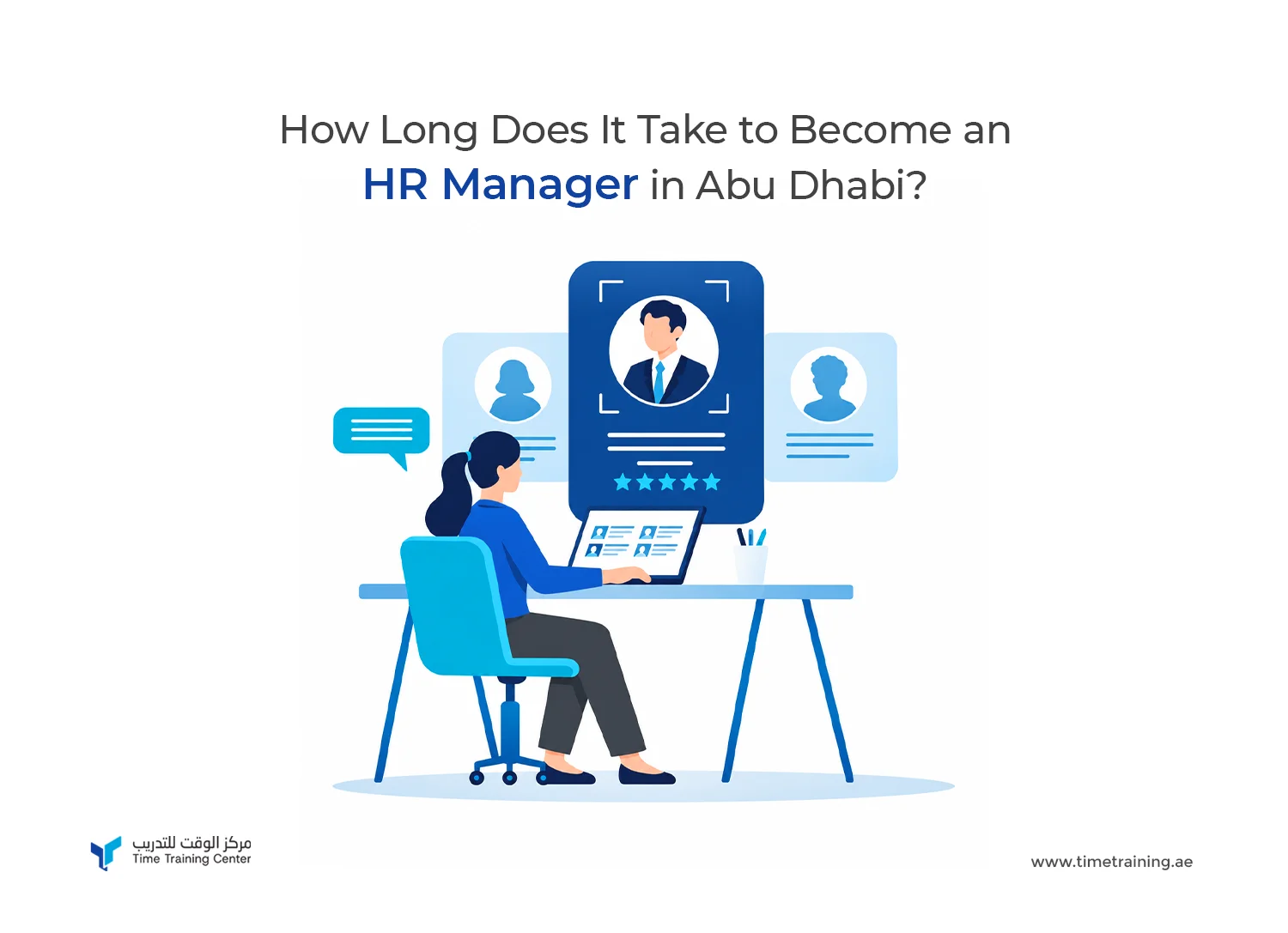
A common path runs from HR Assistant or Administrator to HR Coordinator, then Generalist, Payroll Officer, Talent Acquisition or Employee Relations Specialist, and on to HR Business Partner or HR Manager.
Michael Page's 2027 guide points to demand for mid-to-senior talent acquisition, people and culture, HR transformation, and talent management professionals.
Requirements differ by employer and seniority, so read each job description closely and benchmark pay against current salary guides.
HR professionals can progress through different roles depending on their qualifications, experience, and areas of expertise. Understanding the HR career path, job roles, and salary guides can help beginners identify suitable career options and plan their professional growth in human resource management.
Can Freshers Build an HR Career Without Previous Experience?
Yes, with deliberate effort. Administration, customer service, and coordination experience transfers well to assistant and coordinator roles.
Prove readiness with a small portfolio: an onboarding checklist, an Excel leave tracker, a mock payroll sheet with overtime and gratuity, and an interview scorecard.
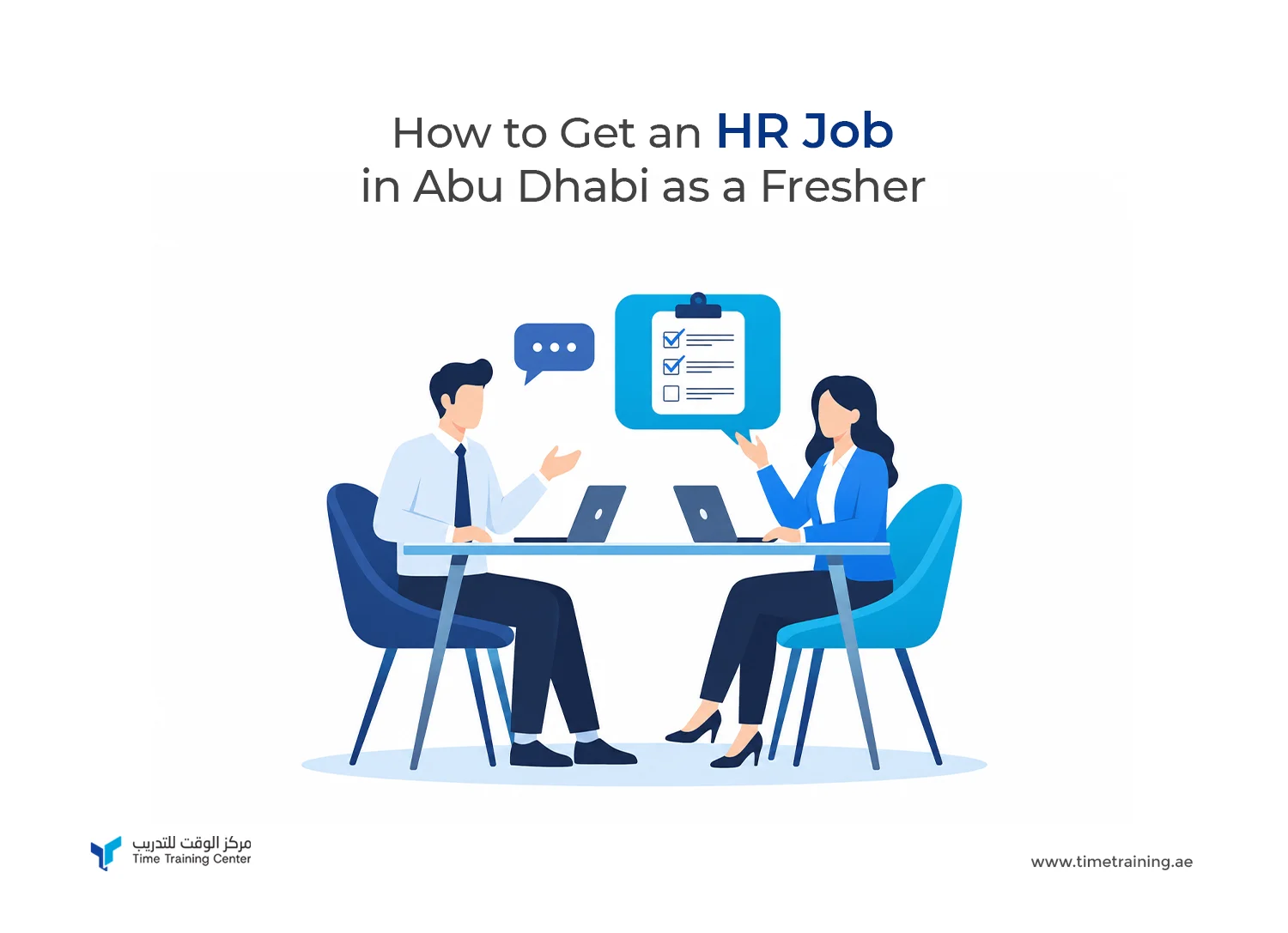
Internships and temporary admin roles add local exposure, and this step-by-step guide to getting an HR job in Abu Dhabi as a fresher covers the entry routes in more detail.
How Can Professionals Develop Their HR Management Skills?
The WEF Future of Jobs Report 2025 expects 39% of workers' core skills to change by 2030, and 63% of employers name skills gaps as the top barrier to transformation. Match the learning route to your goal:
Professional Development Pathways for Building HR Management Skills
| Route |
Best for |
Limitation |
| Self-study (MOHRE, u.ae, SHRM, CIPD) |
Legal and conceptual baseline |
No feedback or practice
|
| Instructor-led training |
Structured coverage, guidance |
Quality varies, check assessment
|
| Practical workshops |
Case studies, mock payroll |
Narrow scope |
| CIPD or SHRM credentials |
Formal recognition |
Exams, experience requirements
|
Is HR Management Training Useful for Career Development?
Developing a successful HR career involves building leadership abilities, improving workplace communication, and gaining practical experience.
As HR professionals take on greater responsibilities, skills such as decision-making, conflict resolution, and employee management become increasingly important.
Learning the effective ways to become a successful HR manager can help professionals understand the qualities and responsibilities associated with HR leadership roles.
Key Takeaways
-
HR professionals support recruitment, employee relations, payroll, and workforce planning.
-
Communication, organisation, and problem-solving are essential HR skills.
-
UAE labour law and Emiratisation knowledge help HR professionals manage workplace responsibilities.
-
Recruitment, payroll, performance management, and HR administration are important HR competencies.
-
HR software, analytics, and AI are changing traditional HR processes.
-
Practical training helps beginners and professionals strengthen their HR knowledge.
Frequently Asked Questions
1. Why are HR skills in high demand in Abu Dhabi?
Non-oil growth, Emiratisation targets, labour-law compliance, and digital HR tools have widened what employers expect from HR teams.
2. What HR skills do employers look for in the UAE?
Labour law, payroll and WPS, recruitment, employee relations, HRMS proficiency, and analytics.
3. Which HR skills matter most for beginners?
Excel, HR documentation, basic labour law, and clear communication.
4. What is WPS?
The Wage Protection System is the UAE's electronic salary-transfer system, overseen by MOHRE, requiring private employers to pay wages through approved channels.
5. Do I need CIPD or SHRM to work in HR in Abu Dhabi?
Not always. Entry roles vary by employer, while these credentials strengthen mid-to-senior profiles.
6. Do mainland labour rules apply in ADGM?
No. ADGM has its own employment regulations, so check the employer's licence jurisdiction.
 +971 2 6713828