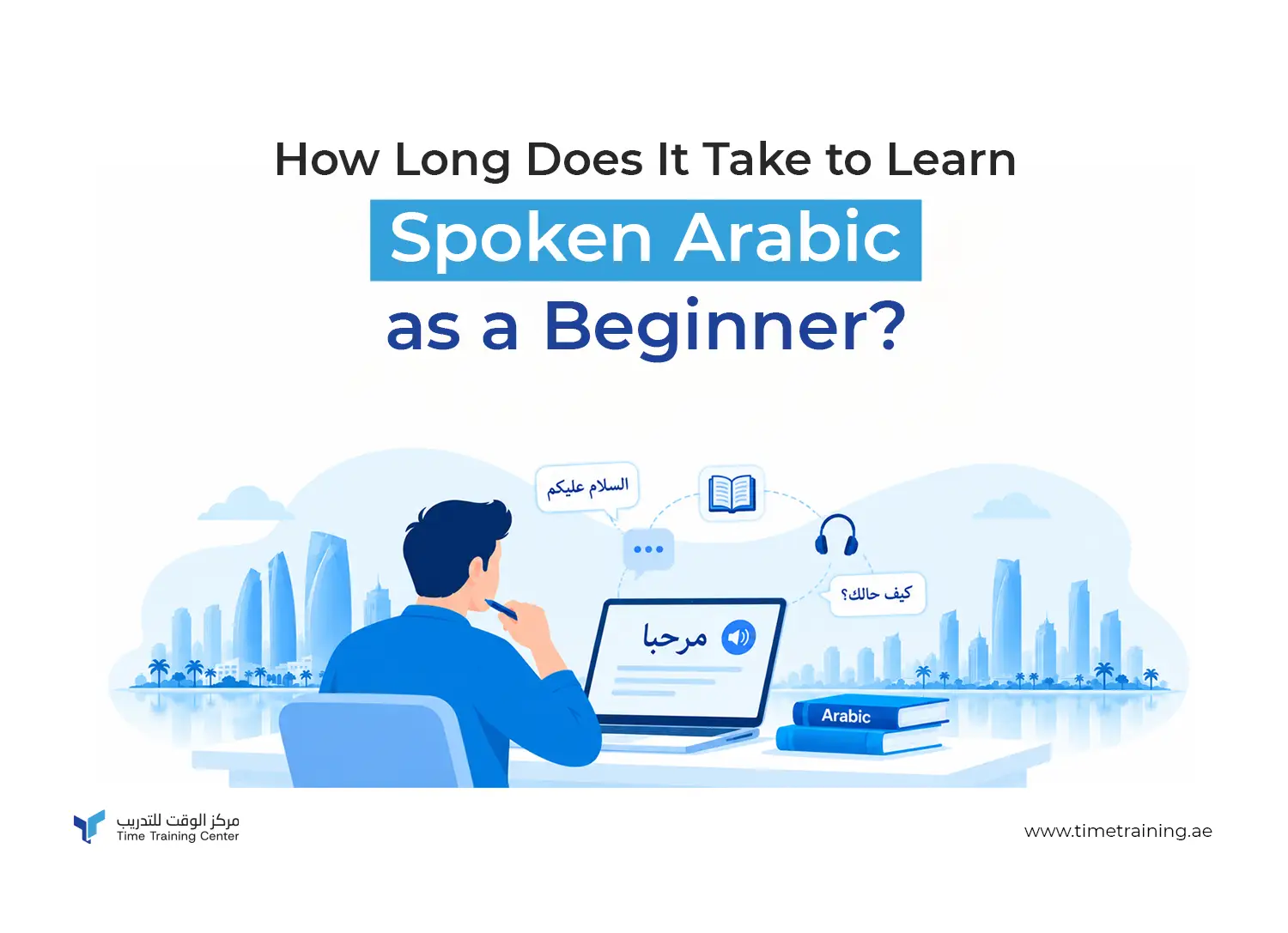
The best spoken Arabic course for beginners in Abu Dhabi depends on your learning goals, preferred teaching style and budget. A good beginner course should focus on everyday conversations, correct pronunciation, useful vocabulary and practical speaking exercises to help you communicate confidently in real-life situations.
Learning spoken Arabic can make daily life in Abu Dhabi easier, whether you are an expatriate, working professional or student. It can help you communicate with Arabic-speaking residents, understand local culture and build stronger personal and professional relationships.
This guide explores the best spoken Arabic learning options and explains what to consider when choosing a beginner-friendly spoken Arabic course in Abu Dhabi.
What Type of Arabic Should Beginners Learn in Abu Dhabi?
Not every Arabic course teaches the same variety of the language. Understand the difference between spoken dialects and Modern Standard Arabic before you enrol.
Emirati Arabic is a variety of Gulf Arabic used in everyday communication in the UAE. It is especially relevant if you want to interact with Emirati locals. The UK Government's Permanent Committee on Geographical Names identifies Emirati Arabic as a variant of Gulf Arabic, distinct from Modern Standard Arabic.
A Gulf Arabic course may cover everyday greetings, introductions, shopping conversations, workplace communication, social interactions, and local vocabulary and pronunciation.
-
Modern Standard Arabic (MSA)
MSA is used in formal writing, education, news and official communication. It gives you a foundation for reading and formal language, but everyday conversations usually involve regional dialects. Decide whether your main goal is conversation or broader language study.
-
General Conversational Arabic
Some institutes offer general conversational programmes covering everyday vocabulary, sentence formation and speaking practice. These suit beginners wanting a general introduction. A general spoken Arabic course is not the same as a course specifically teaching Emirati or Gulf Arabic, so always ask which dialect is taught.
Beginners often face challenges when learning pronunciation, sentence structure and vocabulary. Learn about the Common Mistakes Beginners Make When Speaking Arabic so you can avoid them from the start.
How Does Time Training Centre’s Spoken Arabic Course Measure Up
Time Training Centre offers a structured Spoken Arabic course in Abu Dhabi for people who want to use Arabic in everyday communication, professional interactions and personal development. The programme helps non-native speakers build speaking ability, understand basic conversations and communicate more confidently.
| Particulars |
Details |
| Institute |
Time Training Centre
|
| Course |
Spoken Arabic |
| Available levels |
Beginner, Intermediate and Advanced
|
| Duration |
30 training hours
|
| Estimated completion |
Around one month
|
| Training mode |
Classroom and online (subject to batch availability)
|
| Course fee |
Approximately AED 1,200 (see note below)
|
| Location |
Al Otaiba Tower, Office 901, Khalaf, Electra Street, Abu Dhabi, UAE
|
| Contact |
+971 2 671 3828 |
Published listings indicate a course fee of approximately AED 1,200 for the 30-hour programme. Fees may change depending on the batch and training arrangement, so contact Time Training Centre to confirm the latest price.
Which Arabic does it teach?
The published course information describes a spoken Arabic programme but does not specify whether it focuses on Emirati or Gulf Arabic. If dialect matters to you, ask the institute before enrolling.
What you will learn:
-
Vocabulary: commonly used Arabic words and expressions.
-
Everyday conversations: greetings, introductions and simple dialogue.
-
Grammar basics: foundational structures and sentence formation.
-
Listening and pronunciation: understanding spoken Arabic and speaking more clearly.
-
Speaking practice: role-plays, group discussions and small-talk exercises.
-
Reading and writing: foundational Arabic script skills.
Related reading: 5 Ways to Improve Your Arabic Speaking Skills
Available learning levels:
1. Beginner: for learners with little or no Arabic. Covers basic vocabulary, greetings, simple sentences and everyday expressions.
2. Intermediate: for learners who understand basic Arabic and want to improve conversation, vocabulary and sentence construction.
3. Advanced: for learners who want greater fluency, accuracy and more detailed conversations.
Who can join:
Beginners, expatriates, professionals dealing with Arabic-speaking customers and colleagues, job seekers and students. According to the institute's published information, there are no specific prerequisites.
Training approach:
Instructor-led, interactive sessions with group discussions, role-plays based on real-life situations, grammar and vocabulary exercises, and access to study guides and learning materials.
Assessment and certification:
After completing the 30 training hours, students can apply for a Spoken Arabic certification examination. This is described as a course certification from the institute, not an externally accredited qualification. Before enrolling, ask who issues the certificate, whether the examination is compulsory, and whether additional fees apply.
Before choosing a programme, compare the fees, course duration and learning format offered by different institutes. For more details, read our guide on How Much Does a Spoken Arabic Course Cost in Abu Dhabi?
What Will You Learn in a Beginner Arabic Course?
A good beginner course focuses on practical communication. Typical skills include:
-
Greetings and introductions: for example, Marhaba (hello), Shukran (thank you), Afwan (you're welcome), Sabah Al Khair (good morning) and Ma'a Salama (goodbye).
-
Everyday vocabulary: food and beverages, shopping and prices, family, transport, directions, time and dates.
-
Listening and pronunciation: recognising unfamiliar Arabic sounds and speaking more clearly.
-
Workplace Arabic: greetings, polite requests, introductions and simple discussions about tasks.
-
Reading and writing basics: the alphabet, recognising letters and reading simple words.
A well-structured curriculum moves gradually from simple words to complete sentences and conversations.
How Much Does a Spoken Arabic Course Cost in Abu Dhabi?
Fees vary by institute, level, format and batch. For reference, published listings indicate approximately AED 1200 for a 30-hour Spoken Arabic programme.
Compare total learning hours rather than the overall calendar duration. Also check whether the fee includes:
How to Choose the Right Arabic Course in Abu Dhabi
1. Check the curriculum: Look for greetings, everyday expressions, basic vocabulary, sentence formation, numbers and time, listening comprehension, pronunciation and practical conversations.
2. Choose a course with speaking practice: Vocabulary alone will not make you a confident speaker. Look for role-plays and guided conversations.
3. Consider the trainer's experience: Ask about qualifications, experience teaching non-native speakers and which language is used for explanations.
4. Compare online and classroom formats: Classroom learning offers direct interaction, group conversation and immediate pronunciation feedback. Online learning offers convenience, less travel and flexibility for busy professionals. Choose the format you can attend consistently.
5. Confirm the dialect: If you want everyday UAE communication, ask whether the course teaches Gulf or Emirati Arabic.
6. Review duration, fees and certification: Request the latest details in writing.
Who Should Join Spoken Arabic Classes in Abu Dhabi?
Spoken Arabic classes benefit:
-
Expatriates who want to connect with the local community and manage daily life more easily, from shopping and ordering food to asking for directions.
-
Working professionals in hospitality, retail, real estate, healthcare administration, business and government-related services.
-
Students and university learners building a foundation for personal, educational or professional development.
-
Business owners and entrepreneurs who want common expressions for dealing with Arabic-speaking clients and partners.
-
Complete beginners. You do not need fluency or previous learning experience to start.
Arabic is the official language of the UAE and an important part of its identity and culture, and Abu Dhabi has a highly multicultural population.
Tips to Improve Your Spoken Arabic Outside the Classroom
Consistent practice is essential for speaking confidence.
-
Practise every day: Spend a few minutes revising new words and using them in short sentences.
-
Listen to Arabic: Watch beginner-friendly videos and pay attention to pronunciation and common expressions.
-
Speak with Arabic speakers: Start with greetings and introductions before longer conversations.
-
Keep a vocabulary notebook: Organise words by theme, such as food, shopping, travel and work.
-
Revise class material: Create short conversations using the expressions from your lessons.
FAQ's
1. How much does a spoken Arabic course cost in Abu Dhabi?
Spoken Arabic courses in Abu Dhabi typically cost between AED 600 and AED 2,000 for group classes, depending on the institute, course duration, training format and level. Private one-to-one lessons may cost AED 2,600 or more.
2. Which Arabic dialect should I learn in Abu Dhabi?
For everyday communication with Emirati locals, Gulf or Emirati Arabic is the most practical choice. Modern Standard Arabic is more useful for formal reading and writing. Always ask the institute which dialect it teaches.
3. Can I learn spoken Arabic if my first language is not English?
Yes. Many programmes are designed for non-native speakers. Ask which languages instructors can use for explanations and support.
4. Do I need to learn the Arabic alphabet before joining?
No. Many beginner programmes introduce speaking and listening first, then gradually cover letters and reading basics. Check the curriculum for the sequence.
5. Can children and teenagers enrol?
Some institutes offer separate programmes for younger learners. Ask about age requirements and whether the course is designed for children or adults.
6. Are placement assessments conducted before admission?
This depends on the institute and programme. Some beginner courses accept learners without prior knowledge, while others assess existing skills before assigning a level.
7. Can I receive a certificate after completing a spoken Arabic course?
Certificate policies vary. Ask who issues the certificate and whether it depends on attendance, an assessment or other requirements, and whether any examination fees apply.
8. What should I bring to my first Arabic class?
Most beginners need a notebook, writing materials and any resources provided by the institute. For online sessions, check the software and equipment in advance.
 +971 2 6713828