Learn SAP MM if you enjoy buying, stock and supplier work. Learn SAP SD if you enjoy selling, pricing and deliveries. Neither module is better for everyone. The right choice depends on your background, your interests and the job you want.
SAP MM (Materials Management) looks after what a company buys and stores. SAP SD (Sales and Distribution) looks after what a company sells and ships. In this guide, we compare SAP MM vs SAP SD in plain words, with examples from Abu Dhabi and the wider UAE, so you can choose with confidence.
|
Table of Contents
|
|
1. Key Takeaways
2. What Is SAP MM?
3. What Is SAP SD?
4. SAP MM vs SAP SD: Key Differences at a Glance
5. Core Functions and Daily Tasks
6. SAP MM vs SAP SD: Skills Required
7. SAP MM vs SAP SD: Learning Path and Certification
8. SAP MM vs SAP SD: Relevant Job Roles
9. How SAP MM and SAP SD Work Together
10. Which Module Fits Your Career Interests?
11. SAP MM Career Opportunities in Abu Dhabi and the UAE
12. How to Choose Your SAP Learning Path
13. Conclusion and Your Next Step
14. Frequently Asked Questions
|
Key Takeaways on SAP MM vs SAP SD
-
SAP MM: Covers buying, suppliers, stock and invoice checks (Procure-to-Pay).
-
SAP SD: Covers quotes, sales orders, pricing, delivery and billing (Order-to-Cash).
-
Your fit: Buying and stock work points to MM. Customer and sales work points to SD.
-
Abu Dhabi view: Industry plans and SAP upgrades keep ERP skills useful, yet no course guarantees a job.
What Is SAP MM?
SAP MM is the part of SAP that manages buying and stock. It answers simple questions. What do we need? Who sells it? How much has arrived? Has the supplier invoice been checked?
In SAP S/4HANA, SAP groups this area under Sourcing and Procurement. Many employers and job adverts still say “SAP MM”, so both names matter. Do not confuse either name with the whole SAP S/4HANA system. It is one part of a bigger suite.
The core flow is called Procure-to-Pay: purchase requisition, purchase order, goods receipt and invoice verification. Our SAP MM Training follows this full cycle in a live SAP S/4HANA lab.
What Is SAP SD?
SAP SD is the part of SAP that manages selling and shipping. It answers different questions. What price does this customer pay? Is the stock available? When does the delivery leave? When do we send the bill?
The core flow is called Order-to-Cash: quotation, sales order, pricing, delivery and billing. In SAP S/4HANA, SAP calls this area Sales. Time Training Center also offers an SAP Sales course for learners who lean towards this side.
Management thinker Peter Drucker put it simply in The Practice of Management (1954): “There is only one valid definition of business purpose: to create a customer.” SAP SD supports the customer side of that idea. SAP MM makes sure the goods are there to sell.
SAP MM vs SAP SD: Key Differences at a Glance
The main difference is direction. SAP MM manages what comes into the business. SAP SD manages what goes out.
This table shows the difference between SAP MM and SAP SD side by side.
| Main job |
Buy materials and manage stock |
Sell products and deliver them
|
| Business flow |
Procure-to-Pay |
Order-to-Cash |
| Key documents |
Purchase requisition, purchase order, goods receipt, supplier invoice |
Quotation, sales order, delivery, billing document
|
| Key data |
Material records, supplier records, purchase prices |
Customer records, price rules, sales areas
|
| Daily users |
Buyers, store teams, procurement analysts |
Sales support, order desks, billing teams
|
| Money link |
Posts stock value and supplier payables |
Posts revenue and customer receivables
|
SAP MM vs SAP SD at a glance. Source: SAP process concepts; Time Training Center course content.
What are the Core Functions and Daily Tasks of SAP MM and SAP SD?
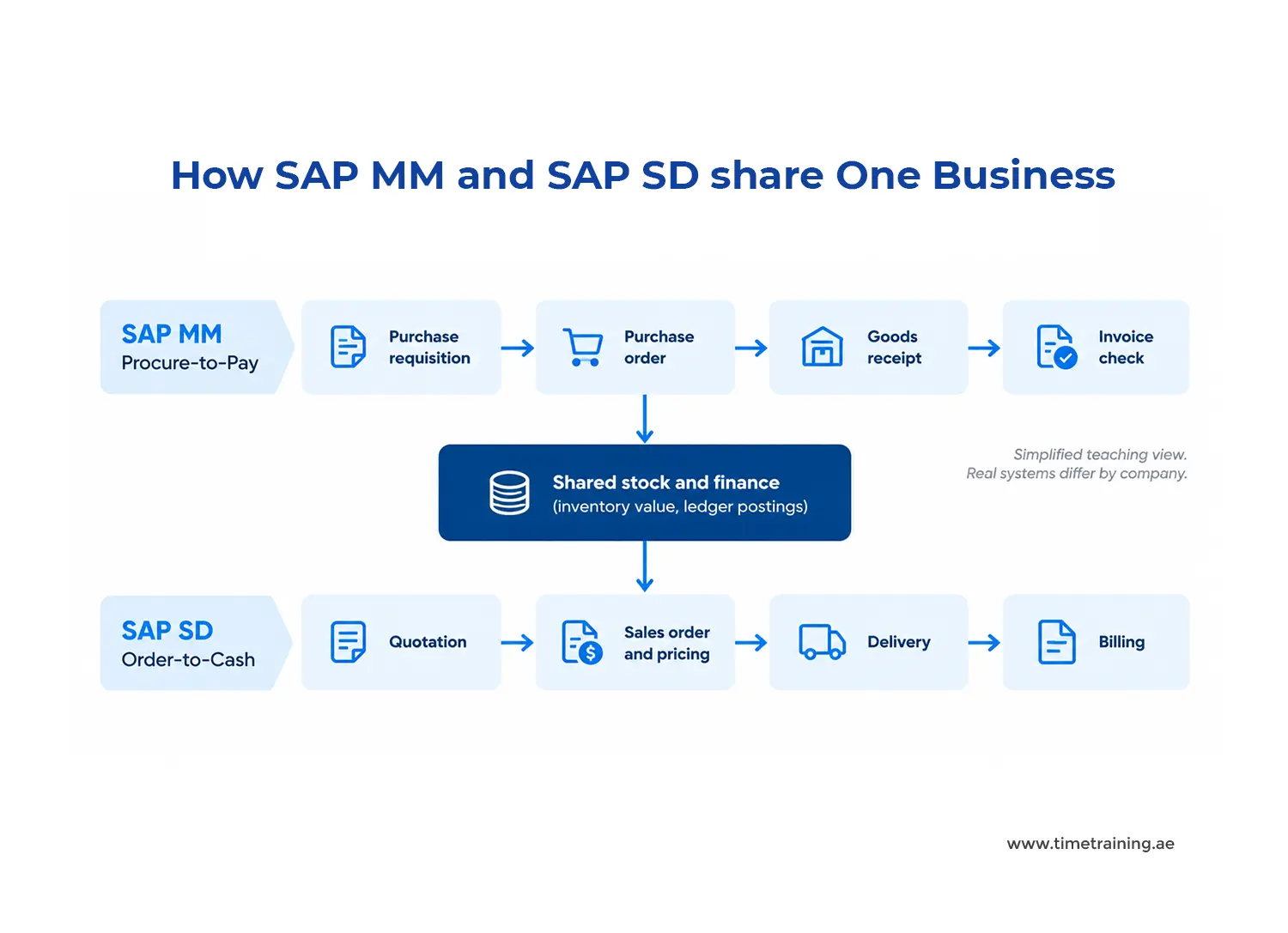
The core functions and daily tasks of SAP MM and SAP SD vary. You can find these differences in the infographic below showing SAP MM Procure-to-Pay and SAP SD Order-to-Cash flows sharing stock and finance data.
-
SAP MM tasks: Create purchase orders, record goods received, manage stock and match supplier invoices.
-
SAP SD tasks: Create sales orders, apply prices and discounts, plan deliveries and issue customer bills.
What skills are required in SAP MM vs SAP SD?
Both modules, SAP MM and SAP SD, require clear thinking, patience with detail, and strong communication. Check out the top SAP module for your career. The business knowledge differs.
| Skill area |
SAP MM |
SAP SD |
| Business knowledge |
Purchasing, supplier terms, stock control |
Sales steps, pricing, customer terms, shipping
|
| Data skills |
Accurate material and supplier records |
Accurate customer and price records
|
| Common checks |
Three-way match of order, receipt and invoice |
Price checks, stock checks, billing checks
|
| Shared skills |
Testing, documentation, talking to users |
Testing, documentation, talking to users
|
skills compared. Job requirements vary by employer.
Q: Do I need a procurement or sales background?
No. Experience helps you understand the steps faster, but beginners can learn either module. Our SAP MM course page states there are no strict prerequisites.
Q: Is SAP MM or SAP SD easier for beginners?
Neither is easier for everyone. Pick the one that matches your daily thinking. If you enjoy checklists and stock counts, MM may feel natural. If you enjoy price rules and customer orders, SD may feel natural.
SAP MM vs SAP SD: Learning Path and Certification
Both paths follow the same pattern: learn the business flow, practise in a live system, then decide on an exam. Here is how they compare.
| Step |
SAP MM |
SAP SD |
| 1. Basics |
Procurement cycle, organisation levels, master data |
Sales cycle, organisation levels, customer data
|
| 2. Practice |
Purchase orders, goods movements, invoice checks |
Sales orders, pricing, delivery, billing
|
| 3. Next level |
Inventory valuation, contracts, supplier selection |
Pricing rules, shipping set-up, billing rules
|
| 4. Exam |
C_TS452_2410 (SAP Sourcing and Procurement) |
A separate SAP S/4HANA Sales exam in the C_TS462 series
|
learning paths. Exam names change, so always check SAP's own certification page before booking.
For SAP MM, our course page lists the exam as C_TS452_2410, with 80 questions, 3 hours and a 63% pass mark. Our 36-hour programme covers the topics behind this exam and shows you how to use SAP's official mock test. You can read more about our SAP MM certification preparation on the course page. For SAP SD, SAP lists its own Sales certification details.
A certificate shows what you studied. It does not guarantee a job. Employers also look at hands-on practice and how well you explain a process. Learn the benefits of SAP MM Certification.
Q: Can I learn SAP MM and SAP SD together?
Yes, but start with one. Learn the main module first, then study the points where the two meet. That order keeps things clear.
What are the Relevant Job Roles of SAP MM vs SAP SD
Job titles differ by company, so treat this table as a guide, not a promise.
| Level |
SAP MM roles |
SAP SD roles |
| Entry |
Procurement analyst, junior materials management specialist, SAP support consultant |
Sales operations analyst, order management support, SAP support consultant
|
| Mid |
SAP functional consultant, ERP procurement lead |
SAP functional consultant, sales process lead
|
| Senior |
SAP solution architect, procurement head |
SAP solution architect, commercial systems lead
|
Roles by level. MM roles follow our course page. SD roles are typical titles and vary by employer.
Here, you'll get a better idea of the job roles and salary for an SAP MM professional.
How SAP MM and SAP SD Work Together
The two modules often meet inside one business story. This is a simplified example, not a system set-up guide.
Imagine a steel parts maker in Abu Dhabi. They buy raw steel from a supplier (SAP MM). The steel goes into stock. A customer then orders finished parts (SAP SD). The system checks stock, ships the order and sends the bill.
A stock transfer between two plants is another meeting point. The receiving plant raises a purchase order in MM, which then triggers a delivery from the supplying plant in SD. This is why people who know both sides are often better at solving problems.
Which Module Fits Your Career Interests?
Use this checklist. Count how many answers point to each module.
| Question |
Leans to MM |
Leans to SD |
| Do you enjoy comparing suppliers and prices? |
Yes |
No |
| Do you enjoy helping customers get what they ordered? |
No |
Yes |
| Do you like stock counts and warehouse flow? |
Yes |
No |
| Do you like price rules, discounts and billing? |
No |
Yes |
| Do you work in purchasing, stores or supply chain? |
Yes |
No |
| Do you work in sales support or order handling? |
No |
Yes |
Career-fit checklist. A close score means either path can work.
Prefer to build a wider base first? Our Logistics and Supply Chain Professional course and Purchase Professional course suit supply-side learners. Sales-minded learners can look at our Advanced Sales Skills course. Also, find out how long it takes to learn SAP Sourcing and Procurement (SAP MM)
SAP MM Career Opportunities in Abu Dhabi and the UAE
SAP MM skills can be useful in Abu Dhabi because many large employers run complex buying and stock processes. Several local trends support this, although none of them guarantees a job.
-
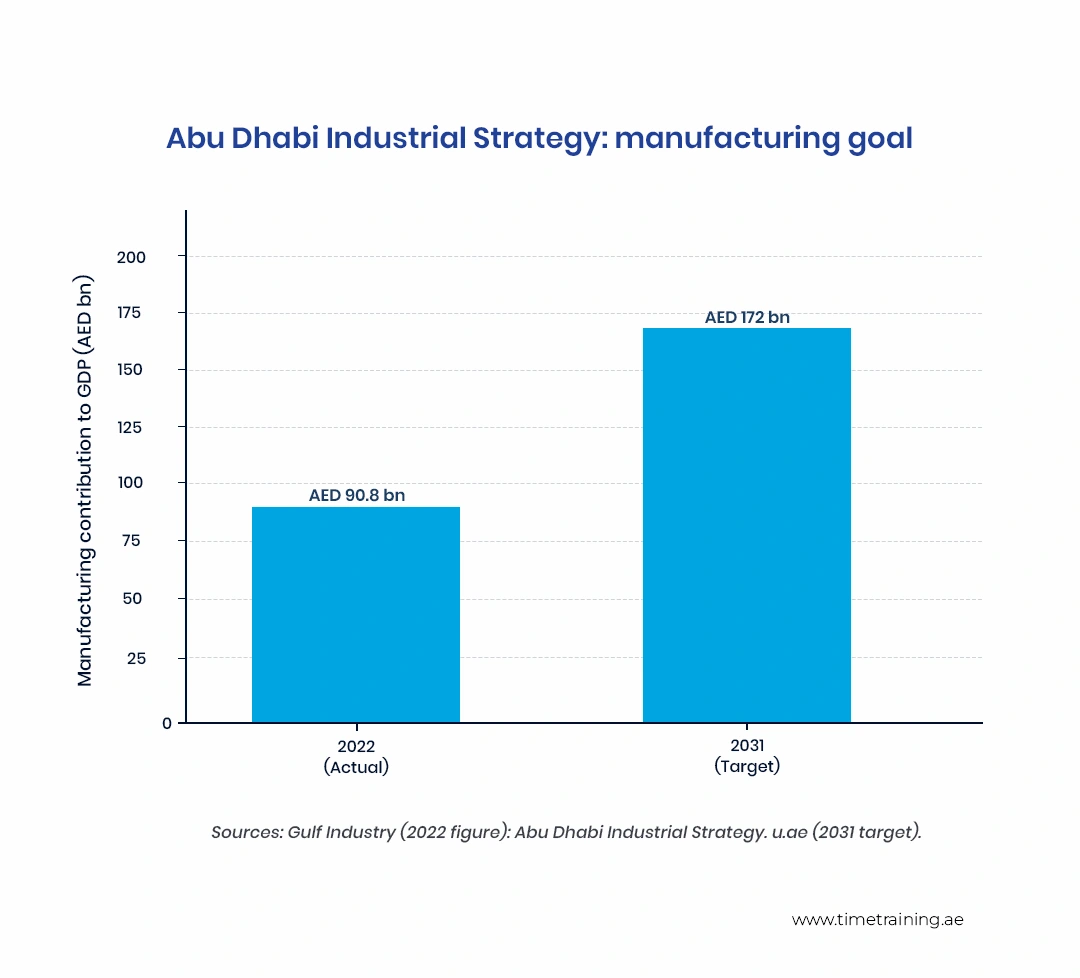
Industrial growth: The Abu Dhabi Industrial Strategy aims to more than double manufacturing to AED 172 billion by 2031, with a Homegrown Supply Chain Programme among its six programmes.
-
Local supplier rules: ADNOC started its In-Country Value programme in 2018, and the UAE Ministry of Industry and Advanced Technology extended it nationally in 2021. Procurement teams track supplier scores.
-
System upgrades: SAP's mainstream maintenance for ERP 6.0 ends in 2027, with optional extended maintenance to 2030. Companies must plan their move to SAP S/4HANA.
-
Sector spread: Energy, ports, steel, property, aviation and defence all depend on purchasing and stock systems.
This bar chart shows Abu Dhabi manufacturing GDP: AED 90.8 billion in 2022 and AED 172 billion target for 2031.
The image below shows the timeline of SAP ECC maintenance. The mainstream support ends in 2027, while providing optional extended support to the end of 2030.
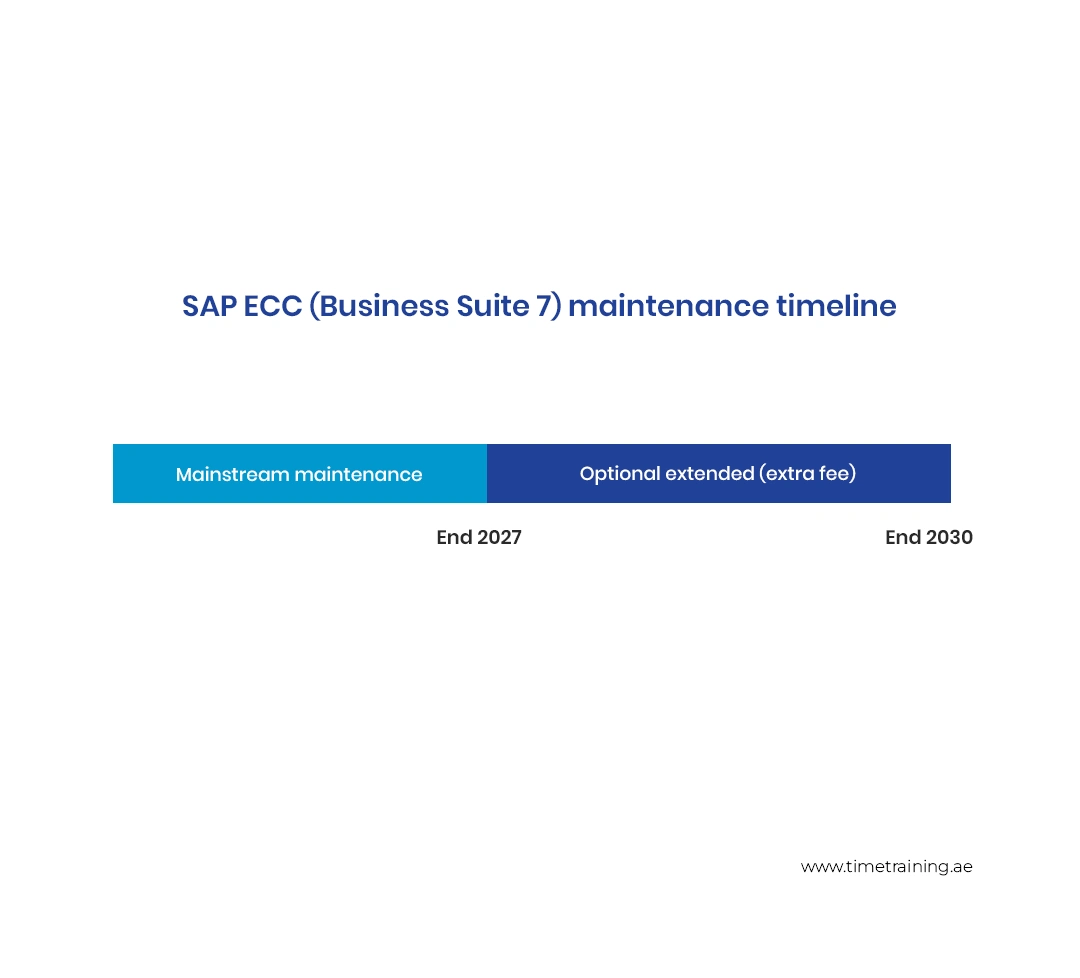
SAP ECC maintenance dates. Source: SAP announcement via SAPinsider; later explainers.
What about pay? We could not find reliable UAE data that separates SAP MM pay from SAP SD pay. One summary of the Michael Page UAE 2025 guide lists ERP consultants at about AED 25,000 to AED 35,000 a month. That range covers ERP in general, so use it only as a rough guide. Pay changes with experience, employer and sector.
How to Choose Your SAP Learning Path
Follow these four steps. They keep your decision simple.
-
Check your background. Note any work in buying, stock, sales or billing.
-
Read three job adverts. Look for the module name and the skills listed.
-
Pick one starting module. Learn its full business flow before the other.
-
Practise in a live system. Hands-on time matters more than reading alone.
Want to see how finance links to both modules? Read our Learning Hub guides on SAP FICO skills in Abu Dhabi and how to become an SAP FICO consultant. You can also browse more guides in the Time Training Center Learning Hub.
Conclusion
If you like buying, stock and suppliers, start with SAP MM. If you like customers, pricing and deliveries, start with SAP SD. Either choice is sound when it matches your strengths.
SAP MM vs SAP SD checklist
- Interest: I know whether I prefer buying work or selling work.
- Background: I have listed my past tasks in purchasing, stock, sales or billing.
- Adverts: I have read three real job adverts and noted the skills.
- Starting point: I have chosen one module to learn first.
- Practice: I have a plan for hands-on SAP S/4HANA lab time.
- Exam: I have checked SAP's current exam name and rules.
- Local view: I understand how Abu Dhabi industry and supplier rules affect my target role.
- Next step: I have spoken to a trainer about my plan.
FAQ's
Is SAP MM better than SAP SD?
No. Neither is better for everyone. SAP MM suits buying and stock work. SAP SD suits selling and delivery work.
What is the main difference between SAP MM and SAP SD?
SAP MM manages what the business buys and stores. SAP SD manages what the business sells and ships.
Does SAP MM still exist in SAP S/4HANA?
Yes, the work continues under Sourcing and Procurement. Many employers still use the name SAP MM.
Which module suits a procurement professional?
SAP MM is the closer match, because you already know purchase orders, suppliers and stock.
Which module suits a sales or distribution professional?
SAP SD is the closer match, because you already know orders, prices and deliveries.
Is SAP MM certification necessary for an SAP career?
It is not always required. It can help show your knowledge, but employers also look for practice and clear communication.
What should I check before choosing an SAP course in Abu Dhabi?
Check the topics, lab access, trainer background, batch size and exam support. Ask what is included before you pay.
What jobs can I look at after SAP MM training?
Examples include procurement analyst, SAP support consultant and materials management specialist. Requirements vary by employer.
 +971 2 6713828